

Down through the ages of history and across the pages of literature, dark times have arrived and found the virtues and valor of men to be wanting. In such times, it has occasionally fallen to women, who by historical standards have not been on the forefront of battle, to take up arms, defend their homes, and pursue peace through strength.
While none of the women that shall be discussed here fall into the modern trope of the female action hero, they each acted with heroism in their own right. They did not do so by imitating the men around them or by rejecting their femininity, but by embracing the natural strengths of the feminine in times when the masculine had failed them.
Great examples abound, but we shall keep the discussion limited to Western Europe in the Middle Ages and early modern period here, because those are the women of valor I am most familiar with. One such example is Empress Matilda, also known sometimes as Maud. She was the daughter of Henry I of England and had been wed to the late Henry V, Holy Roman Emperor.
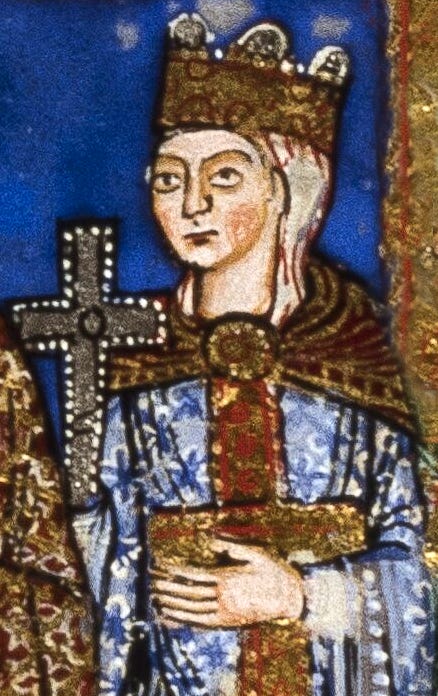
Her brother, and heir to the Kingdom of England, was killed in an incident known as the White Ship Disaster in 1120. As a result, Henry I chose to name Matilda, now widowed, as his heir. The lords of England swore fealty to her at Henry’s request, but upon his death they rallied behind her cousin, Stephen of Blois. A bloody civil war known as The Anarchy erupted across England and England’s French holdings.
Her husband, Geoffrey of Anjou, later known to history as Geoffrey Plantagenet, was her strongest and most ardent supporter. Together, they rallied troops and held onto the French territories of Normandy, Anjou, and Aquitaine. Their endeavor did fail, however, and Matilda never sat upon the throne of England as the kingdom’s proper monarch. She eventually passed the struggle to her son, Henry, who would become Henry II after defeating Stephen in the second phase of The Anarchy. Matilda’s story, though unsuccessful, highlights her resourcefulness as she strove to bring peace to a kingdom torn by civil war.
Another example, from a few centuries later, is Catherine of Aragon. Originally married to Henry VII’s eldest son, Arthur, she was widowed after a few short months. In order to retain the sizable dowry Catherine had brought with her from Spain, she was wed to Henry VII’s second son, who would become the (in)famous Henry VIII. Early in Henry VIII’s reign, he went to war with France and left Catherine as regent with full authority over his kingdom.
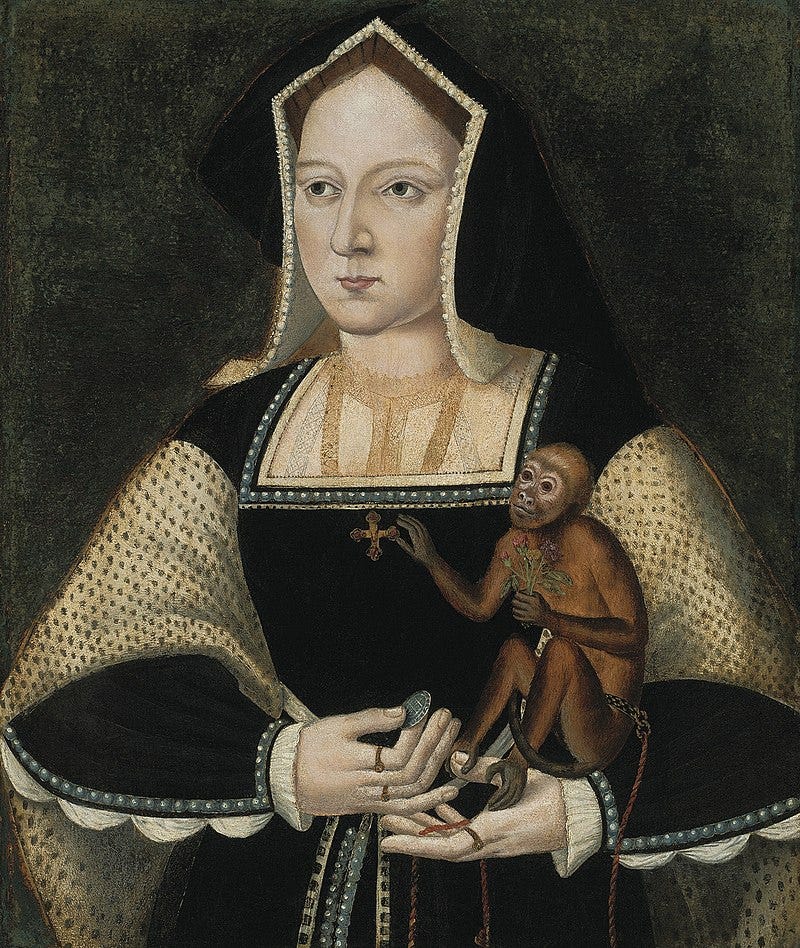
Almost immediately upon her placement as Governess of the Realm, the Scots invaded. With the aid of Sir Thomas Lovell, she raised an army and rode north. Despite her pregnancy, she donned full armor and remained present on the battlefield as her army drove out the Scottish invaders. The battle claimed the life of James IV of Scotland, ending the invasion. This endeared her to the English people, and Catherine became one of the most beloved foreign-born queens in English history.
Likely the most famous woman of valor in European history is Joan d’Arc. Her story is such that if we did not know that it happened, it would be considered far too fantastical to believe. After receiving heavenly visions and coming to believe that she was a virgin prophesied to save France from the English, Joan eventually met with Charles VII of France at Chinon. She was seventeen years old and convinced the king to place his armies at her disposal so that she might break the siege of Orléans. While she was not placed in direct command of the armies, and she did not aid in strategizing, she was a beacon of hope among the French forces and her image drove them to victory.
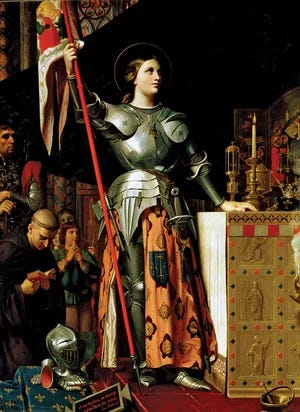
Wearing armor specially commissioned for her by the Dauphin (crown-prince of France), she served as an icon of French resistance to English occupation in France. Her courage and virtue drove the French to victory. While not every battle she attended saw a French victory, she remained an influential figure in the tumultuous kingdom. Her eventual capture and execution by the English in 1431 (she was 19) only further rallied the French. It would not be an overstatement to say that she played a key role in the ultimate French victory in the Hundred Years’ War two decades later.
A literary equivalent for Joan d’Arc is Eowyn from The Lord of the Rings. At the time of Tolkien’s saga, Eowyn lived in the declining kingdom of Rohan, beset with challenges both internal and external. The Westfold fell to the orcish invaders from Isengard and her uncle and king, Theoden, had come under the corruptive influence of Saruman and his formerly loyal advisor Grima Wormtongue.
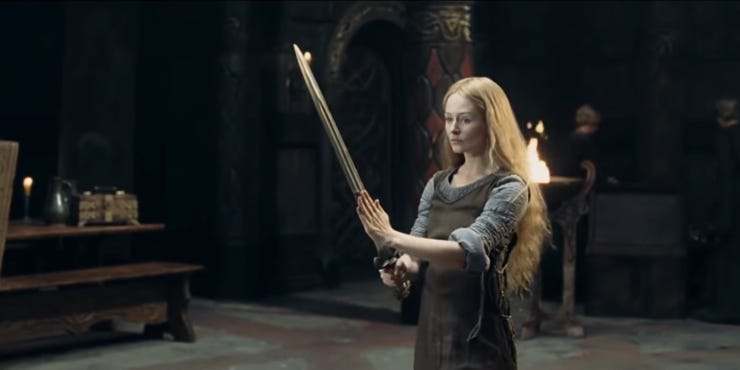
This left the land in shambles, as the only men who were truly loyal to Rohan, including Eowyn’s brother, Eomer, were driven away. It is in this time of desperation that Eowyn chose to take up the sword to fight and risk death alongside the men of Rohan. She was denied this during the Battle of Helm’s Deep, but as Rohan marched for Gondor’s aid at the Battle of Pelennor Fields, she disguised herself as a soldier and, along with the disguised hobbit Merry, rode into battle.
In the midst of the chaos, she witnessed the death of her uncle. He had been renewed by the intercession of Gandalf, and had led his kingdom against the darkness, but it had cost his life. While defending the body of Theoden, she found herself face-to-face with Sauron’s most dangerous servant, the Witch-King of Angmar, leader of the Nazgul. An ancient prophecy had foretold that no man could kill the Witch-King whose power was drawn from his connection to Sauron.
Revealing the dual meaning of this prophecy, the Witch-King was stabbed by Merry, wielding a blade of the barrow-downs, and was then struck dead by Eowyn. The prophecy was fulfilled as it had been Merry (not a man in the racial sense) who severed the Witch-King’s connection to Sauron with his blade, and then Eowyn (not a man in the gendered sense) delivered the final blow.
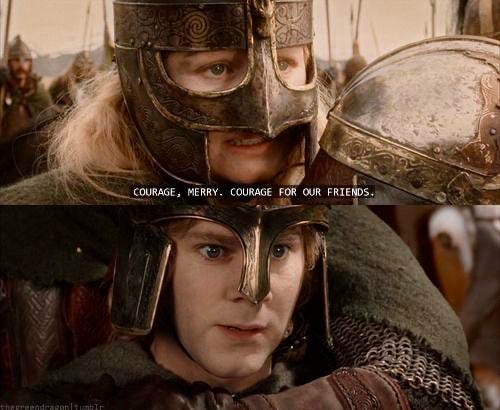
After the battle, while recovering from her injuries, Eowyn met and fell in love with the wounded Faramir, captain of Gondor. Eowyn was a woman of valor who never rejected her femininity, nor did she attempt to become masculine. She instead sought to help preserve her falling homeland by taking up arms in a time when the strength of men was fading. She chose to ride with them into the face of death because to sit back and do nothing in such a time was, in her eyes, evil. She says to Faramir, after his declaration of love, that her eyes have been opened and her path has been made clear after he brush with death:
I stand in Minas Anor, the Tower of the Sun,’ she said; ‘and behold! the Shadow has departed! I will be a shieldmaiden no longer, nor vie with the great Riders, nor take joy only in the songs of slaying. I will be a healer, and love all things that grow and are not barren.’ (The Lord of the Rings, book 6, chapter 5)
After the war, she sets aside her arms and embraces the path of healing, the path of peace. This is the only true path one can take after battle, or else the battle shall never be over. This is her strength, a feminine strength that understands the need to seek peace and to restore beauty to a darkened world once the battle has been fought.
All of these women, historical or literary, continue the tradition of the great biblical heroines like Deborah and Jael who helped to overcome the Canaanites during the pre-monarchic period of ancient Israel. Deborah, a judge and prophetess, rallied the Israelite armies under a man named Barak and saw victory against the Canaanite general Sisera. Upon victory, she composed a song praising the Lord for the victory and hailing the heroism of the tribes that had come to their aid while denouncing those that failed to heed the call. After his defeat, Sisera fled and sought shelter in the tent of Jael who drove a tent spike through the general’s head once he had fallen asleep, thus ending the conflict.
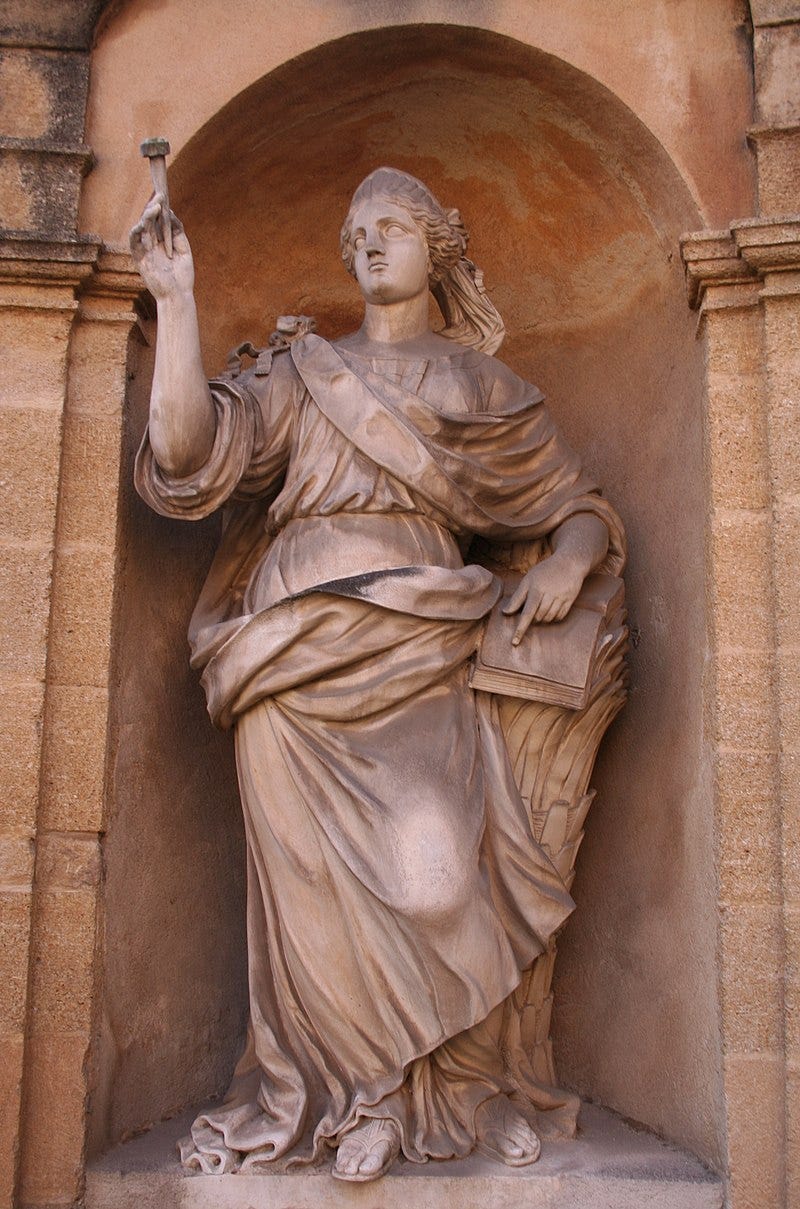
In each of these examples, we find women who answered the call when no others could. While the details of each story complicates matters, as they always do, we would do well to look at the narrative power of their lives and appreciate the virtues they displayed during times of need. The feminine is not the same as the masculine, but this difference is not one of inequality.
As I wrote in “The Princess and the Knight,” there is no imbalance of power in such dynamics, only the complement of two fundamental and primal aspects of creation. One is not complete without the other, and the true strength of one is revealed in the presence of the other. And, when the day arises that one is unable to fulfill its duties alone, the other will rise to the occasion and they will shine the brighter, for good is made great in weakness.