

Villains have been at the heart of some of our greatest sagas and series, whether on-screen or in text. They are one of the key factors leading to a story becoming truly great. A good villain can be one of the most memorable features of a narrative, whether this is due to their cruelty, strangeness, ‘cool-factor’, horror, or sometimes their redemption arc.
Whatever it is that draws a person to a villain, it is clear that something fascinates us with the darker elements of stories. Sometimes the hero and villain are inextricably connected, like many superheroes and their arch-nemeses, and other times the villain outshines the hero. It’s an interesting turn of events that we should so often favor villainous characters in media and find them more intriguing or satisfying to watch than the heroes.
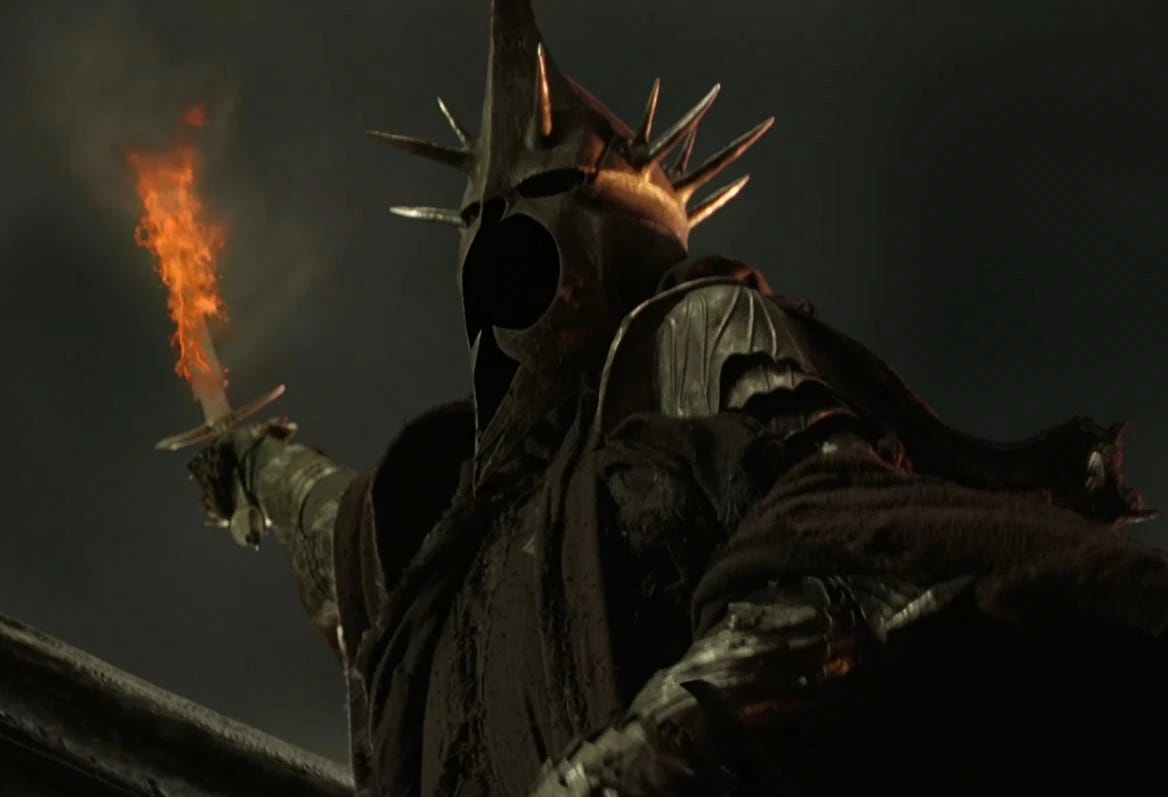
Many people consider heroes, especially those pure of heart, to be rather boring. Villains tap into some taboo that culture just can’t get enough of. It’s gotten to the point where even our heroes today have become anti-heroes more often than not. Some might argue that this is because it feels more realistic due to the moral complexity of our world. There’s merit to that argument, but it’s not quite enough because it doesn’t explain our general preference for straightforward villains, even when they don’t have tragic pasts or sympathetic motives. The question becomes, what makes evil so fascinating? And is evil actually all that interesting?
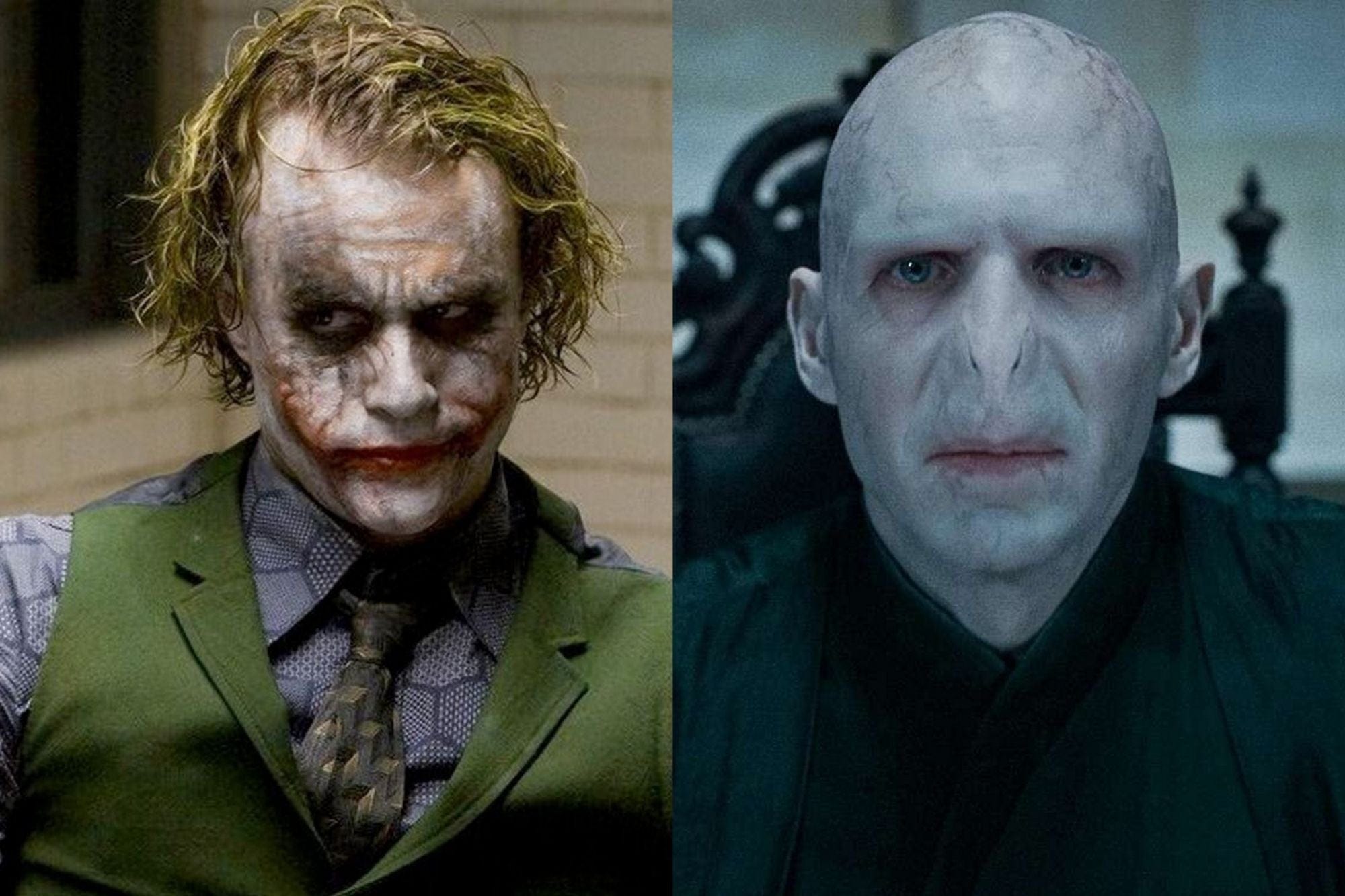
If one were to survey the most impactful characters of 21st century media, I guarantee there would be an inordinate amount of villains on the list. Figures such as Sauron and the Witch-King from Peter Jackson’s Lord of the Rings adaptation, Heath Ledger’s Joker and Tom Hardy’s Bane from The Dark Knight Trilogy, Javier Bardem’s Anton Chigurh from No Country for Old Men, Voldemort from the Harry Potter series, Ramsey Snow and Joffrey Baratheon from A Song of Ice and Fire/Game of Thrones, Thanos and Loki from the Marvel Cinematic Universe, and many others would certainly be in the discussion, and rightly so.
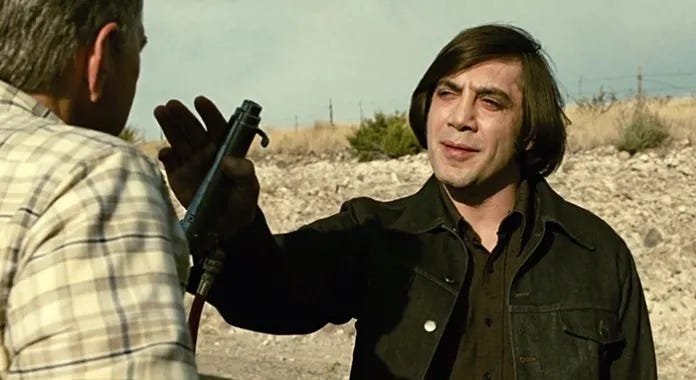
If we look at some of these figures more closely, then we can see what about them strikes us so potently. Let’s take Anton Chigurh from No Country for Old Men. One of his defining features is his soullessness. He feels more like an automaton than a man in many of his scenes, and his moral compass is utterly divorced from human ethics and remains mostly incomprehensible throughout the film (I cannot speak to the book as I have not yet read it). Lives are retained or lost based on the flip of a coin, but refusal to play the game at all is losing it straight away in his eyes.
His philosophy seems to focus on the pathways people take in life and the risks they take along the way, the rules they follow that guide them on their journeys. When speaking with a gas station attendant, he claims that the attendant has been putting his life up on the table since it began, he just didn’t know it. He had chosen a safe and simple life, but he had been playing the game nonetheless. When Anton eventually confronts a bounty hunter named Carson Wells, he asks him if the rule Carson followed that had led him to that moment was of any actual use if he still wound up at the nonexistent mercy of Anton.
Perhaps Anton fascinates people because of his inhumanity. He feels like something completely other, like a force of nature, but we can imagine someone like him potentially existing in the real world. We know that evil people exist. Some of us have known evil people in our own lives. Evils like Anton are real, and seeing them on the screen reminds us of that fact. In the controlled context of a film or novel, a villain may appear fascinating due to their connection or lack thereof to the real world. In reality, however, most villains are quite boring.
If we look at the mechanisms behind the Nazi regime, we don’t see mustache twirling monsters who laughed with glee as they signed the death warrants of thousands, tens of thousands, millions. Instead, we see bureaucrats with families and friends who got up for work in the morning just as people do today, bureaucrats with pets and hobbies and favorite songs, only to sign such death warrants without a second thought. No wicked joy, no evil laugh, no cruel smile. Just banal clerical work you might even have mistaken for a present day DMV. This fact reminds us that they were human and not under-the-bed monsters, but their humanity only makes what they did all the worse. It provides complicating context to our understanding of the human condition.
Villains in stories give us a glimpse of evil characters, or tragically flawed characters, from a perspective that demands interest as they relate to the plight of our heroes. If they were to be removed from the drama of the story—if we were to see their day-to-day lives—they would lose much of the mystique they carry.
Most evil actions throughout history have been done for relatively uninteresting reasons and in uninteresting ways. Bureaucracy, incompetence, apathy, the vain search for human perfection or absolute equality, or the mere desire for power and wealth. None of these are especially interesting in their own right, and the great evils of the past century were mostly committed by either buttoned-up administrators or simple soldiers ‘just following orders’. Hardly the dramatic flare of villainy one would expect from the stories.
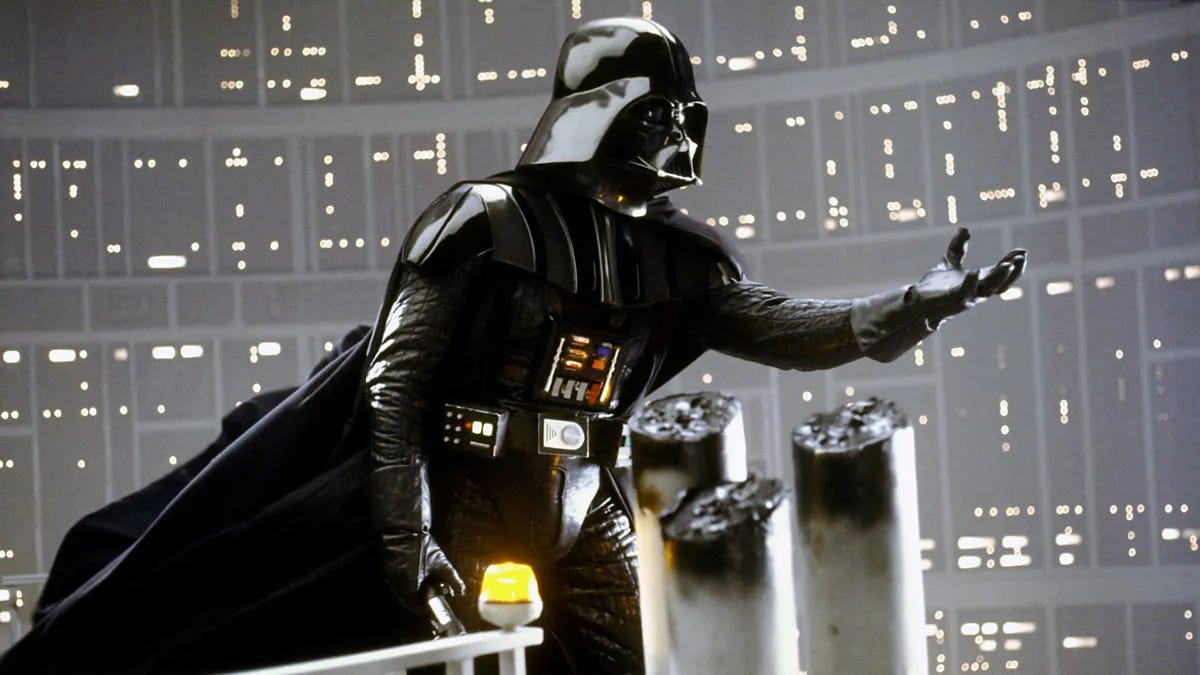
If we saw extensive footage of Darth Vader sitting at a desk simply administering bits of the Empire, he would lose a significant portion of his ‘cool factor’ or intimidation. If we saw the Joker lie down in bed at night and count sheep to help himself fall asleep, he would, for a moment, not be quite so menacing. If we saw Anton Chigurh stop to go to the bathroom, perhaps he would begin to feel a bit silly to us. Evil exists in the mundane, not solely in dramatic moments, but in stories villains thrive on their disconnect from daily experience.
Our fascination with villains comes from the drama through which they are presented. People want to see the darker bits of the world, of humanity, but we don’t necessarily want to see it within daily life. But that’s where it actually lives. By contrast, the heroic figures of stories can lose their luster in comparison, not only because we simply see them more often but because their actions don’t feel quite so dramatic by comparison. There are many nuances behind the depiction of good and evil in stories, and one could spend a lifetime studying one side or the other. Perhaps next week we’ll look at the flipside of this coin.
In writing good villains, there are a number of approaches one can take. My personal preference has always been to keep the villain’s screentime to a minimum. The less you see the villain, the more power he/she has over the narrative. They remain a relatively unknown factor. They require a strong entry to show the danger they pose, but they should not be seen very often. Personally, I would never give the main villain of one of my stories a point of view within the narrative. They’ll only ever be seen from the perspective of other characters, characters who learn to fear them. That is my preference, but it is certainly not the only option.
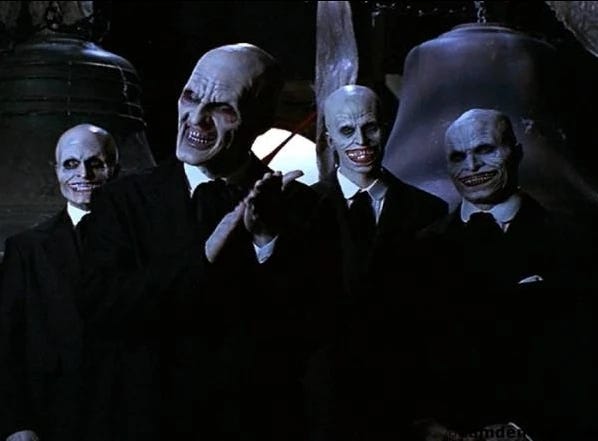
I found while growing up that villains in TV series seemed more interesting and stronger the less they were shown. If we look at the big bads from Buffy the Vampire Slayer, most of them are all over their respective seasons. You see them constantly, and by the end of the season they just feel like one character among many. Maybe they’re still threatening, but there’s little mystery left. I don’t say this to disparage the show, I did enjoy it when I watched it, and my mom remains an avid fan of the series.
It does, however, contrast with the practice of the first five seasons of Supernatural. Personally, I consider all seasons after season five to be nothing more than fanfiction of varying quality. In the first five seasons, the main villains are rarely seen. They might show up three or four times over the course of 20+ episodes, most of those appearances being quite short. The villains remain mysterious and powerful in the audience’s imagination because of their rarity. They do not become mundane and boring as normal evils actually are.
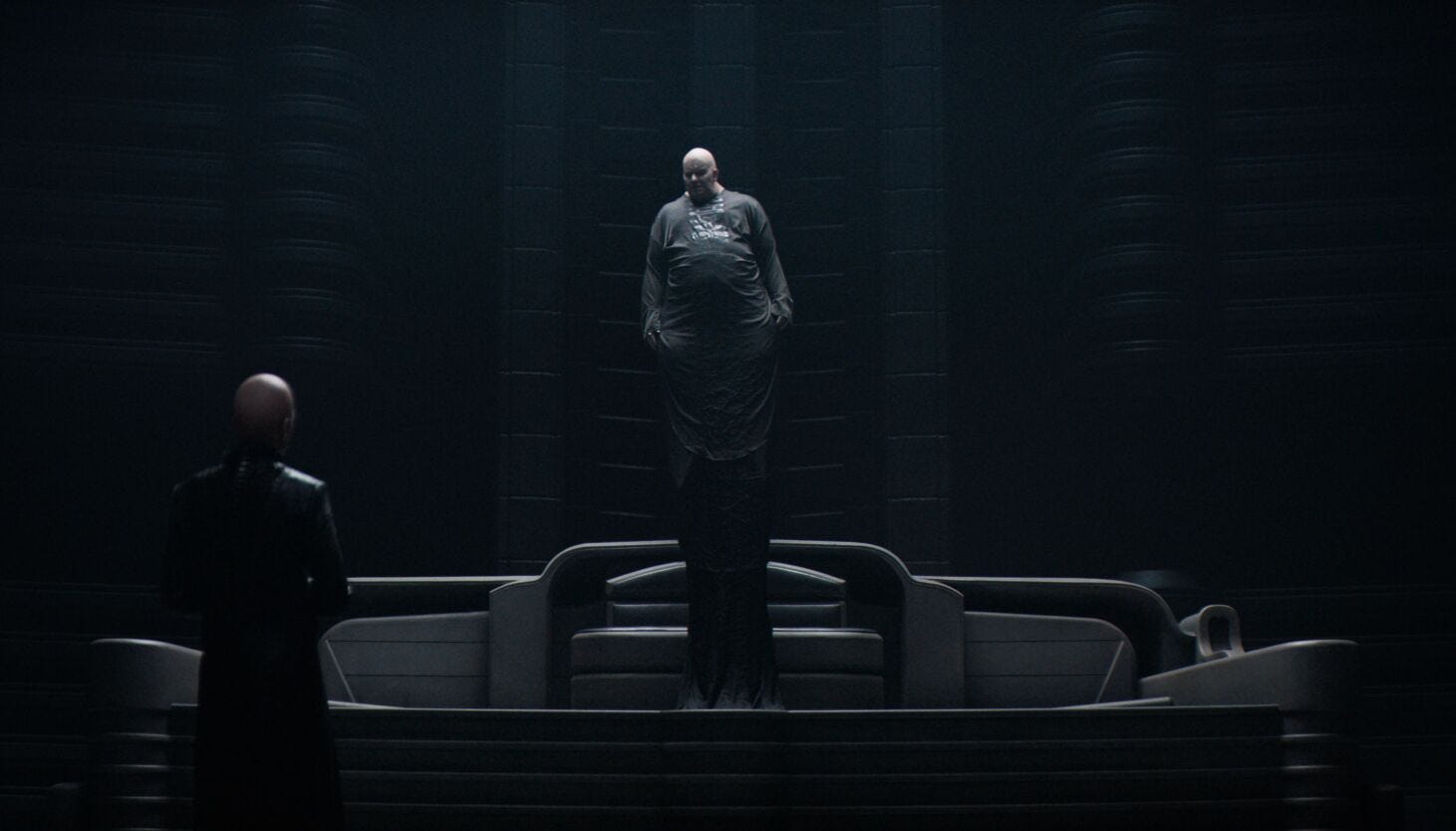
Looking famous examples, it's easy to understand why villains make such an impact on us in their stories, but we do seem to disconnect when considering evil in reality. People remain complex and, oftentimes, more morally grey than black or white. Villains show us the flashy, dramatic flare of a character working toward darkness without all the crummy details mixed in. This makes it easy for us to forget the full picture. Have you ever considered if Baron Harkonnen has food allergies? Would he become perhaps a little less threatening if you knew he couldn’t drink milk without tummy rumbles? Something to think about.
Which villains have most fascinated you? Why?