

During my studies at the University of St. Andrews, I wrote my master’s dissertation on the depiction of night stalkers in three medieval texts. Two of the texts were literary: Beowulf and Grettis Saga (the story of Grettir the Strong), and one was a historical chronicle written by William of Newburgh. My thesis focused on the depiction of these night stalkers as something other than human while remaining quite human in their desires and hatreds. Each account shows the effect of social ostracism and isolation on individuals.
The most famous of these night stalkers is Grendel from Beowulf. A surprisingly human monster that wreaks havoc on the mead hall of Heorot, Grendel is a descendent of Cain who loathes humanity and all the joy, festivity, and revelry he sees and hears from the hall each day and night. This loathing is born of envy, however, not a fundamental hatred of community. Grendel despises that which he can never have. In his monstrosity, a level of humanity is found.
Grettis Saga, our other literary text, follows the life and deeds of Grettir the Strong as he goes from hero to villain. The turning point of his life can be seen in his fateful confrontation with the draugr Glamr. Glamr’s story is fascinating on its own because even in life he was a disagreeable man who found himself on the edges of society. He held to pagan ways while most of Iceland had already been Christianized.
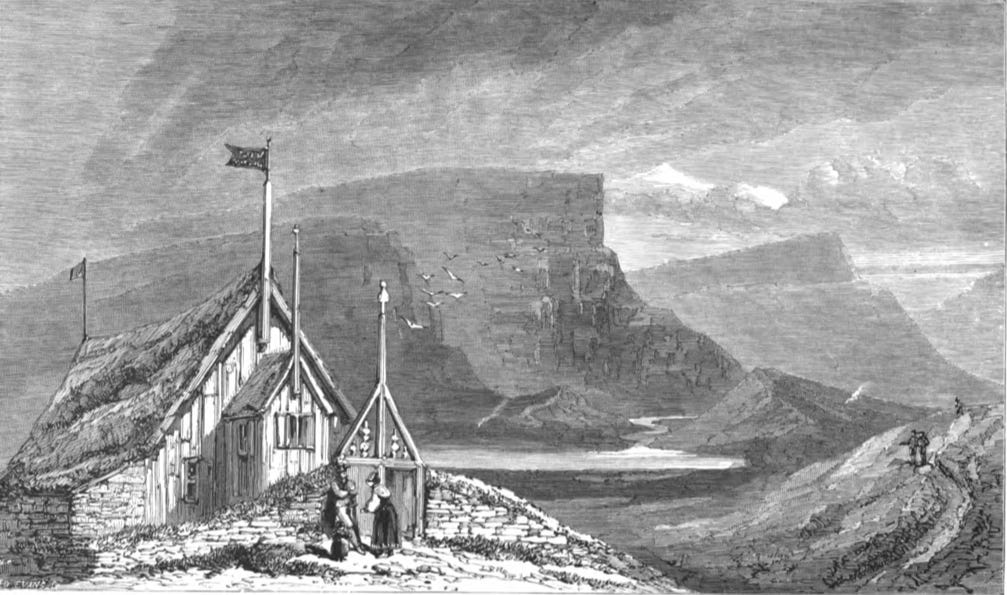
While working as a farmhand, Glamr does battle with a night stalker of his own, eventually vanquishing it, but dying while out in the snow. By the time his body was found, it was too late. He was accursed and his body could not even be dragged onto hallowed ground. Glamr returned in the night to terrorize his former employer at Thorhallsstead, gaining a fearsome reputation.
Upon hearing these stories, Grettir travels to Thorhallsstead to rid it of the draugr. Here, we see a clear difference between Beowulf and Grettir. In his battle with Grendel, Beowulf was clearly superior to his opponent, while Grettir is outmatched by Glamr. In the end, however, Grettir bests the draugr and as Glamr lies in the snow, his eyes catch the glint of moonlight and, for the first time, Grettir is paralyzed with fear. Just before his death, Glamr speaks a curse over Grettir:
You have expended much energy, Grettir, in your search for me. Nor is that to be wondered at, if you should have little joy thereof. And now I tell you that you shall possess only half the strength and firmness of heart that were decreed to you if you had not striven with me. The might which was yours till now I am not able to take away, but it is in my power to ordain that never shall you grow stronger than you are now.
Nevertheless, your might is sufficient, as many shall find to their cost. Hitherto you have earned fame through your deeds, but henceforward there shall fall upon you exile and battle; your deeds shall turn to evil and your guardian-spirit shall forsake you. You will be outlawed and your lot shall be to dwell ever alone. And this I lay upon you, that these eyes of mine shall be ever before your vision. You will find it hard to live alone, and at last it shall drag you to death.
With this, Glamr falls back dead and Grettir is left with the consequences of his recklessness and his dealings with evil. After his battle with Glamr, Grettir is eventually outlawed. His great strength and abilities that had once made him a hero, now made him a monster.
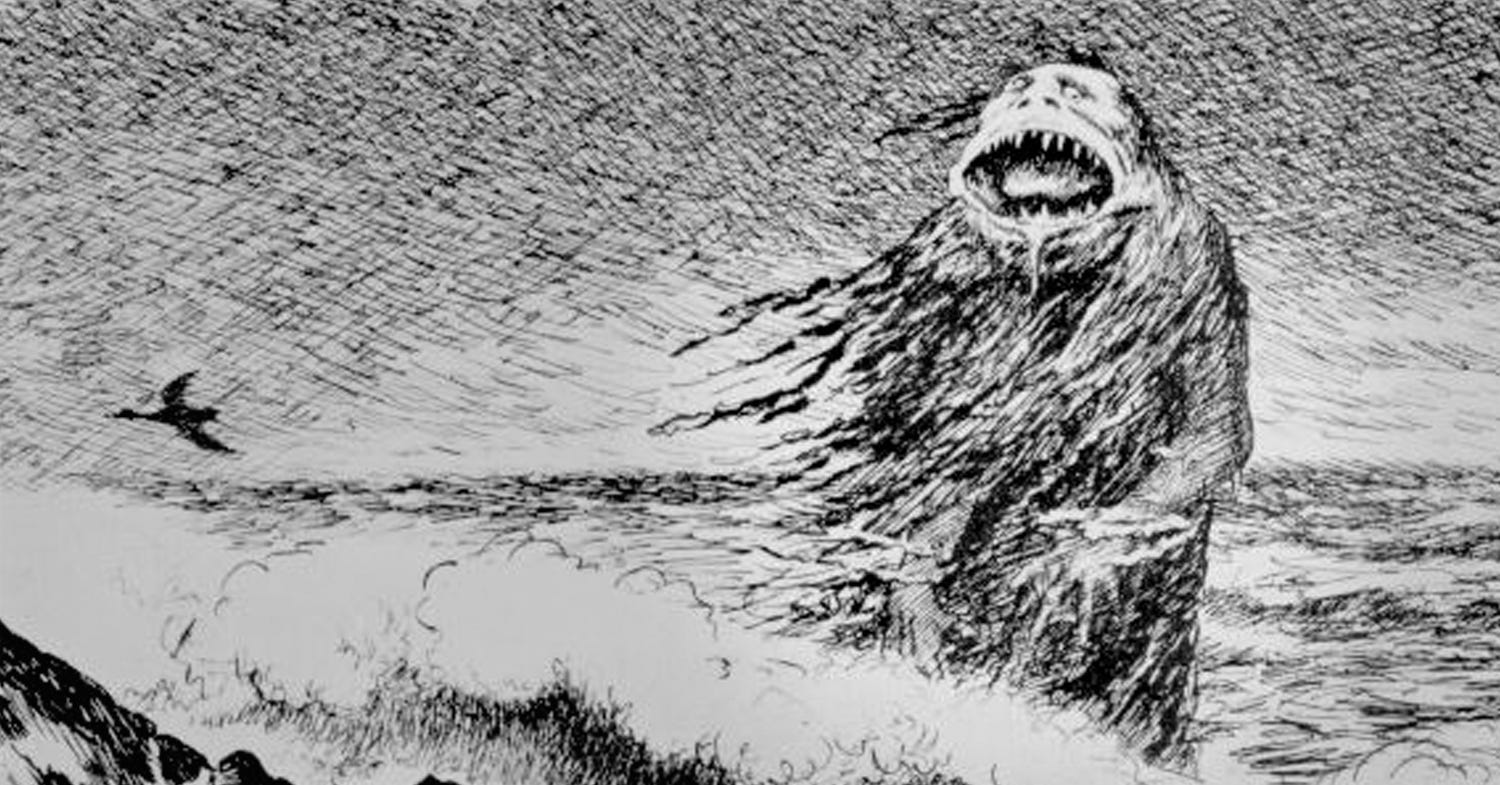
Our final text, Historia rerum Anglicarum by William of Newburgh, is not a work of literature but is instead a historical chronicle. Within the text, William discusses five episodes of strange occurrences in towns across Britain. The dead return and terrorize the living, including a foul priest and an abusive husband. These revenants range in severity from simple nuisances to existential threats to entire villages, bringing pestilence and crop failures with them.
Each of these stories is written as a historical event, not a work of fiction. They detail the ways these communities survived the assaults of the revenants and how they eventually put a stop to the terror. This often required them to step outside what would normally be considered acceptable or ethical, including the cremation of the revenants to prevent their continued hauntings. Cremation was, for many centuries, banned due to its connection with paganism. It was understood as a denial of the resurrection of the dead on the last day. Facing their destruction, however, the villagers turned to these unsavory means to end their afflictions.
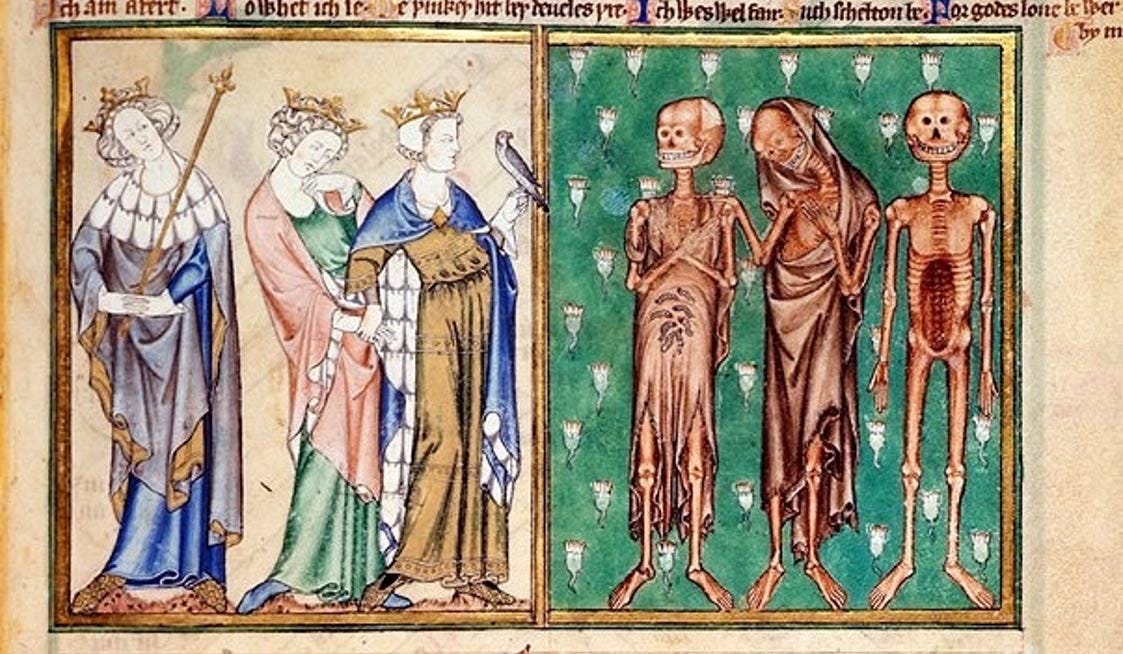
Through these stories we can see examples of how evil often acts as a contagion. Philosophically understood, evil has no being in itself. It is a privation or an absence of the good, not something with its own unique or independent existence. In this way, we might imagine it as an ever-expanding chasm, a maw that draws things and people into it through corruption and the slow march of entropy.
In Glamr, we have a man who chooses to live on the outskirts of society. When he is confronted with evil, he himself becomes a monster. The very same sequence occurs with Grettir. Though Grettir does not become a draugr, he is diminished and brought to villainy as a result of his meddling with dark forces. A favored Nietzschean aphorism among edgy teenagers is relevant here: “Battle not with monsters lest ye become a monster. And if you gaze longingly into the abyss, the abyss gazes also into you.”
This is not to say that battling against evil is necessarily doomed or that we inevitably fall victim to darkness when we face it. Rather, it means that the reckless pursuit of evil will eventually overtake us. It is very easy to become what we fight against if we do not have a moral center anchoring us. Our weakness can become their strength. In the opening of Cormac McCarthy’s No Country for Old Men, Sheriff Ed Tom Bell recalls an encounter with real evil. This reflections ends with a rumination on the risks of a profession where one’s primary task is quarrelling with evil:
Somewhere out there is a true and living prophet of destruction and I don’t want to confront him. I know he’s real. I have seen his work. I walked in front of those eyes once. I wont do it again. I wont push my chips forward and stand up and go out to meet him. It aint just bein older. I wish that it was. I cant say that it’s even what you are willin to do. Because I always knew that you had to be willing to die to even do this job. That was always true. Not to sound glorious about it or nothing but you do. If you aint they’ll know it. They’ll see it in a heartbeat. I think it is more like what you are willin to become. And I think a man would have to put his soul at hazard. And I wont do that. I think that maybe I never would.

It’s an interesting connection that both Grettis Saga and No Country For Old Men reference eyes in the corruptive nature of evil. Glamr tells Grettir that his eyes shall haunt the man for the rest of his life while Sheriff Ed Tom Bell felt the eyes of the prophet of destruction upon him, frightening him out of the battle altogether. Both of these, of course, are joined by Nietzche’s aphorism of the abyss gazing back into us. Eyes are often referred to as the windows of the soul, and evil in these examples is depicted as a robber creeping through them to steal our resistance from us.
There is true evil and darkness in the world, and the willingness to confront it may involve virtue and courage, but it can just as well involve the fall from grace. In a sense, this is reminiscent of the Lough Foyle Colloquy between St. Columba and the mysterious youth of unknown origin. After their strange conversation, Columba is asked by his followers what was said between them and Columba refuses to tell them even a single word, stating that mortals ought to remain in ignorance of some things for our own benefit. It has been theorized that the youth was some unfallen human, an angel, or perhaps even the devil himself. Regardless, the encounter was deemed dangerous by Columba.
There is a sense that interaction with the Other, the Strange, is also dangerous to an extent but that is a topic for another time. For now, we’ll focus on how the encounter with darkness can blind us to the light, or at least dim our sight. We might understand it as a gradual callousing of the spirit until our conscience no longer recognizes that we are committing or engaging with evil, but there are more radical ways to frame it as well. With Grettir, the curse laid upon him by Glamr is itself sufficient to bring him into full corruption.
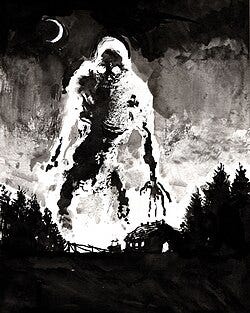
Beowulf himself does not become a monster, though we do see him eventually meet his match in his battle with the dragon. His battles do prove fatal. Grettir clearly falls victim to this cycle, his heroism inverting and leading him to destruction and the loss of his status. We do not know what ended up happening to all the villagers in the revenant episodes of Historia, but we can grasp that they did not become monsters likely because their actions were anchored to their faith and the defense of their communities.
Inside of us all are monsters like Grendel and Glamr. Each one of us feels the siren call of the destructive prophet. It is not folly to battle evil, but it is folly to assume that we are immune to its wounds and influence. Taking heart and pursuing what is right, for just reasons and for something greater than oneself, may be a shield against the abyssal gaze. It is not by our strength that we overcome darkness as the light does not originate within us.
If we remember that when its eyes land on us, we will not blink.