

“I did not steal the crown. I found it lying in the gutter, and I picked it up with the sword. But it was the people who placed it on my head.”
This quote is often attributed to Napoleon Bonaparte (r. 1799-1814, 1815), though we do not know for sure whether or not he actually said it. Regardless, it has been used in movies dramatizing the events of Napoleon’s life, and for good reason. It showcases the dramatic power of kingship and the responsibilities found beneath its weight. France had been long plagued by an elite class that cared little for the peasantry, and the indifference of her kings did not assuage the situation.
From the time of Louis XIV, the French monarchy emphasized the divine right of kings, the idea that they had been installed by God to bear the burden of the crown for one of God’s earthly kingdoms. This mandate of heaven, to use the equivalent Chinese concept, granted them absolute authority as representatives of the French nation.
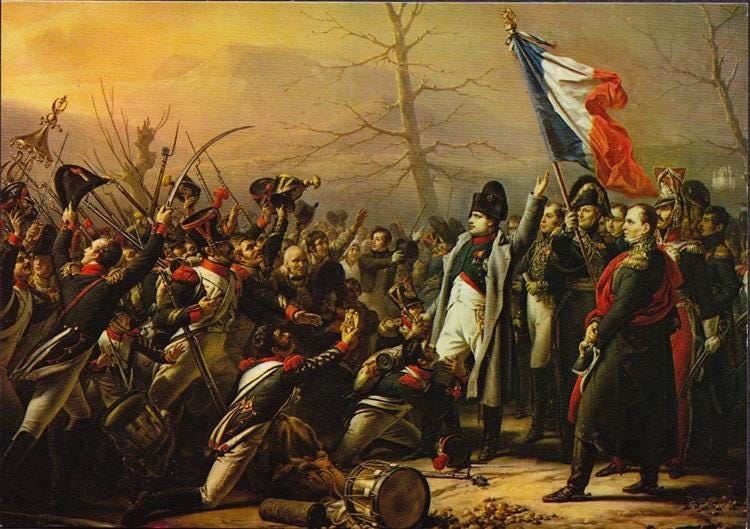
A forgotten element, however, was that of good rule. This divine right exists only so long as a king pursues the good of his people. We see King Saul in 1 Samuel lose his right to rule due to his rejection of divine guidance and his selfish purposes. The mandate of heaven was then passed on to David. In the case of France, Louis XVI’s rule was overthrown in revolution leading to his and his wife’s executions. The power vacuum left by the empty throne led to years of endless and bloody revolution in the Reign of Terror. France and her traditions were left in a gutter overflowing with the blood of innocent and guilty alike.
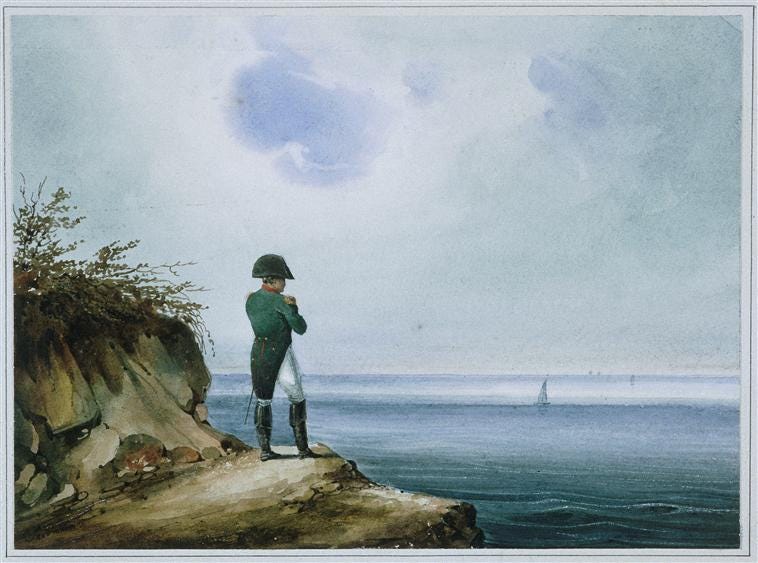
When Napoleon took power, he did so at first as Consul, later becoming Emperor through the mandate of the French people. His own failures as a ruler led to his defeat and subsequent exile to Elba, then to his final defeat at Waterloo and a second, more permanent, exile to St. Helena. His ambitions to rule over Europe cost him his right to rule, the mandate of heaven. He had rescued the crown from the gutter and had restored order to France, but he was still a flawed man whose mistakes cost him. In Napoleon we see the return of the king, the restoration of glory to a nation in chaos, and we also see the fall from grace.
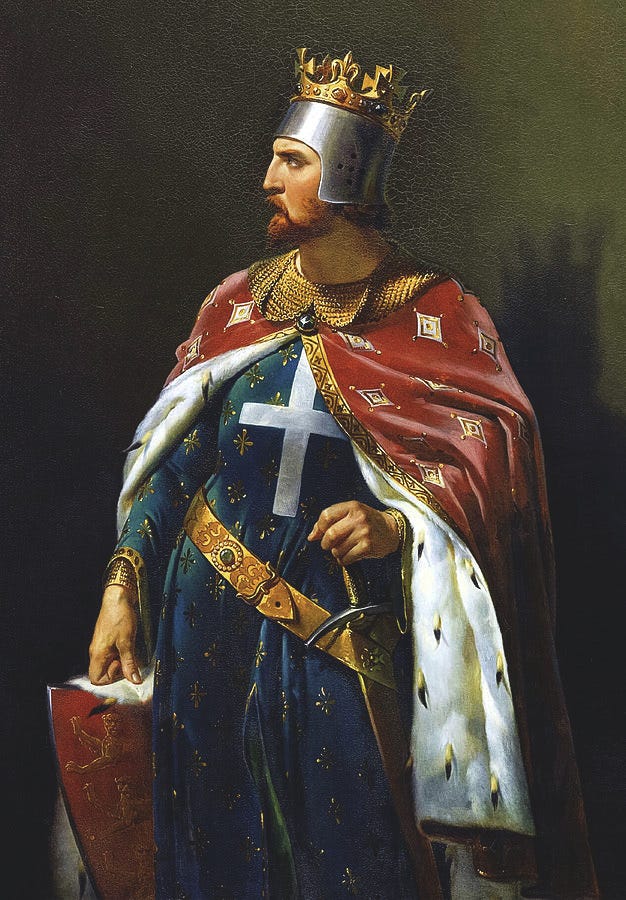
History abounds with examples, the most famous of which might be that of Richard I the Lionheart (r. 1189-1199). Richard inherited the throne from his father, Henry II, who had himself been a king restoring order to a fractured nation. Upon his ascension, Richard set sail for the Holy Land to battle Saladin for the Kingdom of Jerusalem. He left behind his younger brother, John, who was to be watched by their mother, Eleanor of Aquitaine. During Richard’s absence, the men he had set over his kingdom as regents proved incapable, leading John to prop himself up as a makeshift king.
This proved disastrous as England and the Angevin territories fell into turmoil under John’s attempted leadership. Richard returned to England in early 1194, having been delayed due to imprisonment in Germany. At once, John and his forces surrendered the kingdom to Richard’s authority, not daring to fight against him. It was enough to know that the true king was returning. Richard, ever the knight, pardoned and forgave his brother who then served loyally for the remainder of Richard’s reign. England’s problems were not solved by Richard’s return alone, but the chaos was quelled and the nation was given a respite to heal.
The return of the king is a powerful image in stories and history, and we find it deep within our subconscious. In the literary realm, we have Arthur, the Once and Future King, as well as Aragorn, the Heir of Isildur. These are figures who embody the virtues of kingship which are the virtues of knights writ large.
Like the knight, the king slays the dragon. He brings peace and stability, not chaos and division. The true king is a man who has fatherly affection for his people, embracing the culture and traditions of his nation. A king is nothing if not the avatar of his nation, and if he does not love his countrymen and the land in which they live, he has no right to claim the title of king.
Usurpers and pretenders bring disorder as they seek power and glory through vain ambition, but the true king fulfills his duty by bringing prosperity. Power and duty are dangerous and potent forces in human endeavors. They are inextricably linked, and those who seek power without recognition of the duties implied are doomed to tyranny. And those who recognize duty but fail to understand power shall inevitably see their realms fall into well-intentioned chaos.
The battle between kings and chaos is as old as stories, seen in its most primal form through Chaoskampf, the struggle against Chaos. This is a trope seen in countless cultures worldwide, most prominently among Indo-European cultures. A king, often the sun god or god of the sky, comes to do battle with a serpent or dragon of darkness.
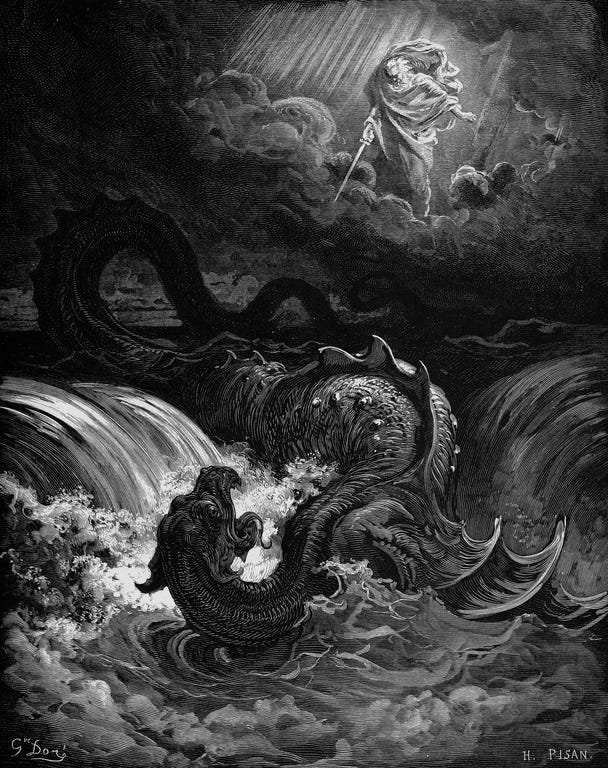
The king casts down the serpent and brings order to the cosmos. Examples can be seen in Marduk vs Tiamat of Babylonian myth, Baal vs Yamm of Canaanite myth, Indra vs Vritra in Vedic/Hindu myth, Ra/Aten vs Apophis is Egyptian myth, and Zeus vs Typhon in Greek myth. Each legend depicts a king bringing peace to a world torn asunder.
In history, these kings are rarely as virtuous as though ought to be, but in them we see the shadow of something greater. They are imitations, anticipations of something more fundamental to the world. History is itself a story, and we best understand the world around us through narrative. This speaks to the grand narrative of all history, and in these stories and in these men, we can see the imprint of that narrative in our imaginations.
We find metaphysical truths in the stories of Richard I and Napoleon. But let us add others to this list: Octavian, Alfred, Casimir III, Alexander II, and Tokugawa Ieyasu. These were men of destiny whose stories, in their own flawed ways, echo the deepest story of all. This is a truth that humanity has grasped since the beginning. Darkness came, and the light will someday cast it away. Disorder has spread, but order will be restored.
The King is good. The King has gone. The King will come again.
When chaos is intentionally calmed, the body and mind have an opportunity to heal.