

Among the most famous and influential games of the last thirty years is FromSoftware’s Dark Souls. It was a game that gave birth to an entire subgenre of action-RPGs and redefined the way people approach both designing and playing games. Now, Dark Souls owes much to its predecessor Demon’s Souls, but unlike its forerunner, Dark Souls was able to hit some semblance of a mainstream audience. It quickly became known for its difficulty and ambiguous narrative design, though the reality is that while the game is challenging, its difficulty is primarily due to the lack of handholding the players receive from the developers.
Obviously with the advent of more recent FromSoftware titles like Bloodborne, Dark Souls III, Sekiro, and Elden Ring it pales in comparison when it comes to mechanical fluidity and boss fight complexity. Nonetheless, these games and many others would not exist if it weren’t for the original Dark Souls.
This post is not intended to be a retrospective on the game itself or an exploration of the game’s deep lore. If you want those, there are countless videos on YouTube that you can find. This Substack is not focused on such discussions anyway. Instead, I want to explore the themes of the game (and its sequels in later posts) to shed light on their philosophical and narrative implications.
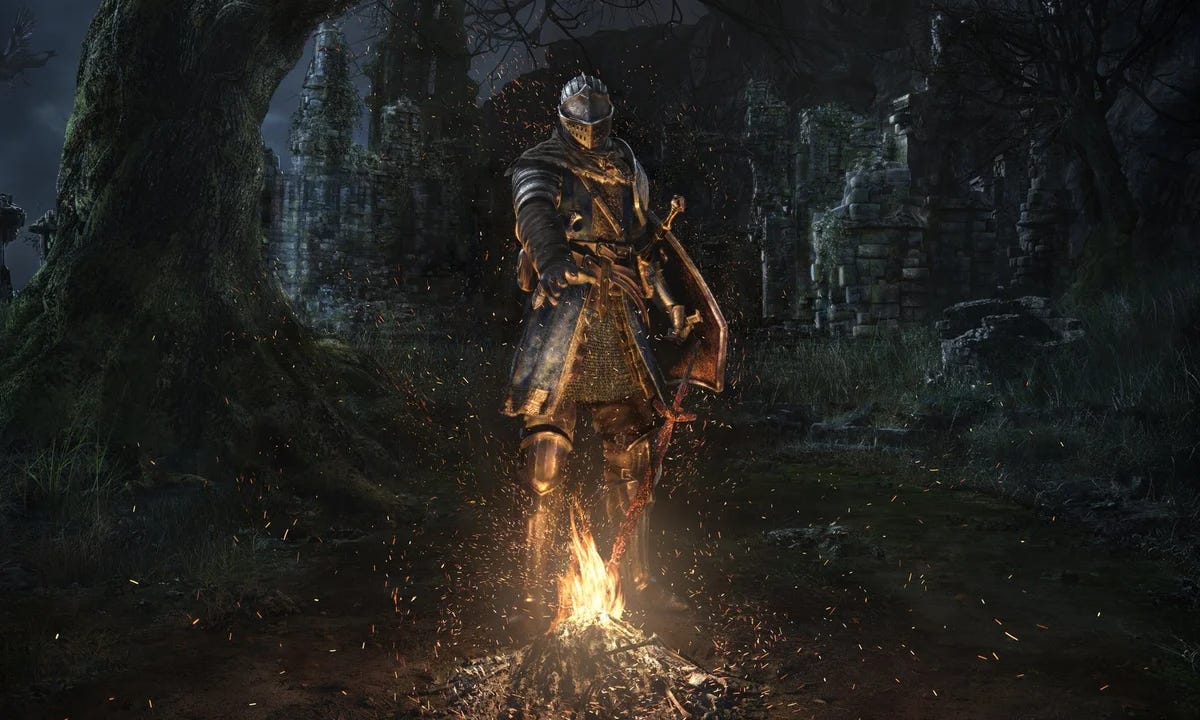
In order to explore the themes, however, the absolute basics of the setting and lore must be overviewed. We are presented with these basics in the opening cinematic of the game.
During a period known as the Age of Ancients, the world was formless and dotted with Archtrees. Ruling over the primordial world were the Everlasting Dragons with their scales of stone. Then came the First Flame, and from the flames came those who would claim the Lord Souls: Gwyn, the Lord of Sunlight and Lord of Cinder; Nito, First of the Dead; the Witch of Izalith; and the Furtive Pygmy (so easily forgotten) who would claim the unique Dark Soul. Together, with the aid of the betrayer Seath the Scaleless, they warred against the dragons and ushered in the Age of Fire. This was an age of flourishing civilizations and development, led by the god-king Gwyn.
Soon, however, the embers began to fade and an Age of Dark was approaching. In an effort to stave off the coming Dark just a bit longer, Gwyn linked the flames using his own soul as kindling. At the time of the game, the embers are fading once more. Prophecies speak of a Chosen Undead who will make pilgrimage to Lordran, the Land of the Ancient Lords, to ring the Bell of Awakening and link the fires once more to hold back the Dark.
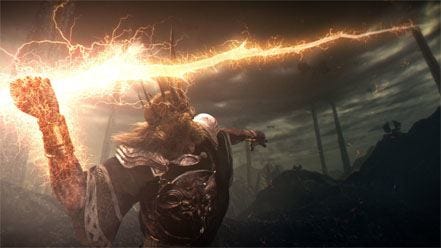
As the Chosen Undead, afflicted with the Undead Curse—causing you to repeat the cycle of life and death endlessly until you lose all trace of humanity and go hollow—you scour Lordran to retrieve the Lord Souls and return them to the place where it all began. There, you must choose to link the fires once more or to embrace the inevitable turning of the age.
The lore goes far beyond this, but these basics are sufficient for our discussion of themes. If additional lore is required later on, I’ll provide a brief explanation to contextualize the point of issue.
A clear theme present throughout the series but most notable in the first one is that of perseverance. The Chosen Undead must persevere through the challenges of Lordran, the deaths and dangers of hollowing, and grasp his way to victory at the Kiln of the First Flame. Not only does the character need to persevere, however, so too does the player. This is a point that has been made by many in the past.
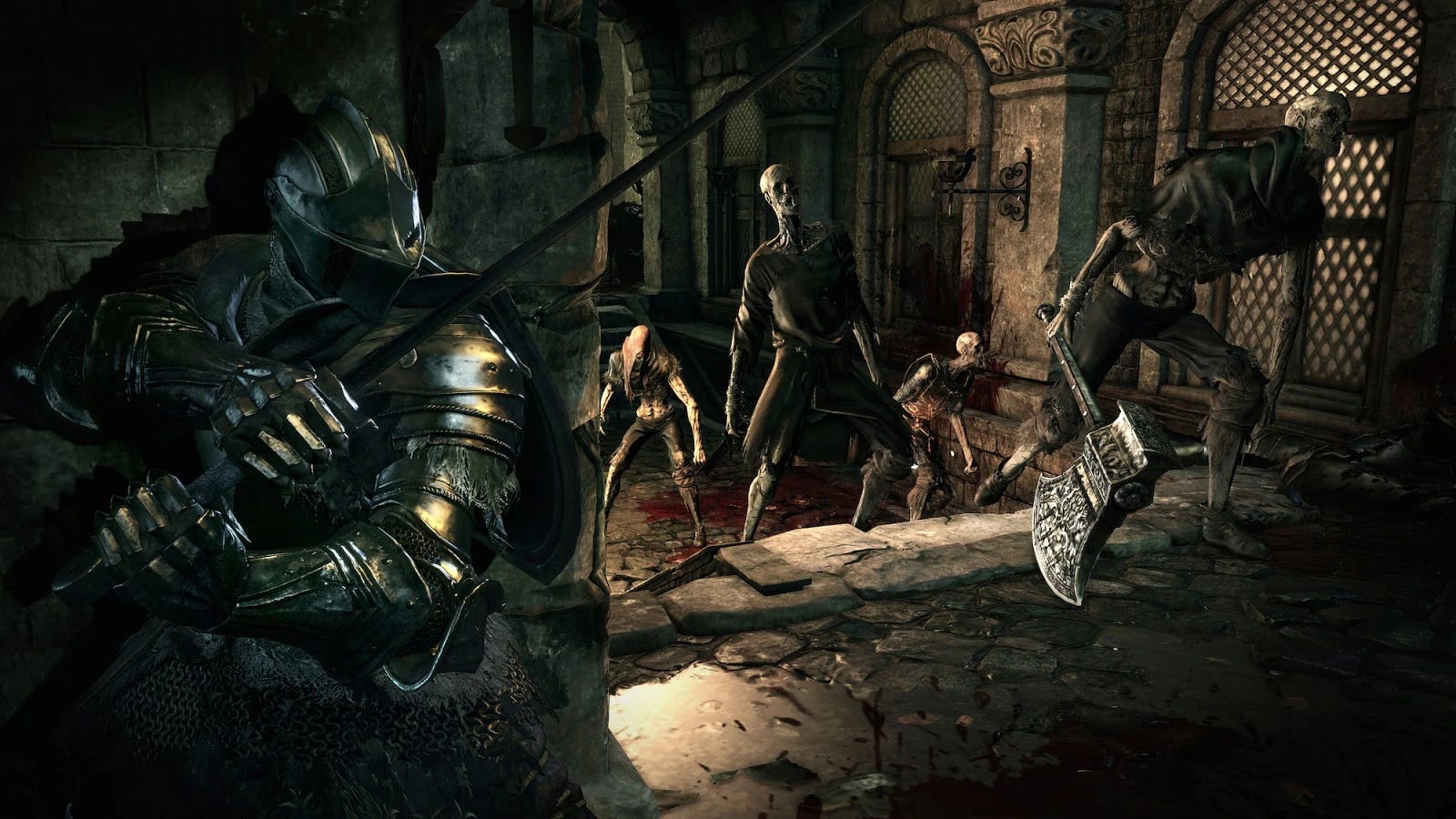
The various hollows you see throughout Lordran are those who could no longer persevere through the curse. They represent more than just the hollowed undead, though, they also represent the players who could no longer persevere through the challenges of the game. They gave up. They went hollow and now shamble through the ruined streets and pathways of Lordran as mightier heroes push onward before their unseeing eyes.
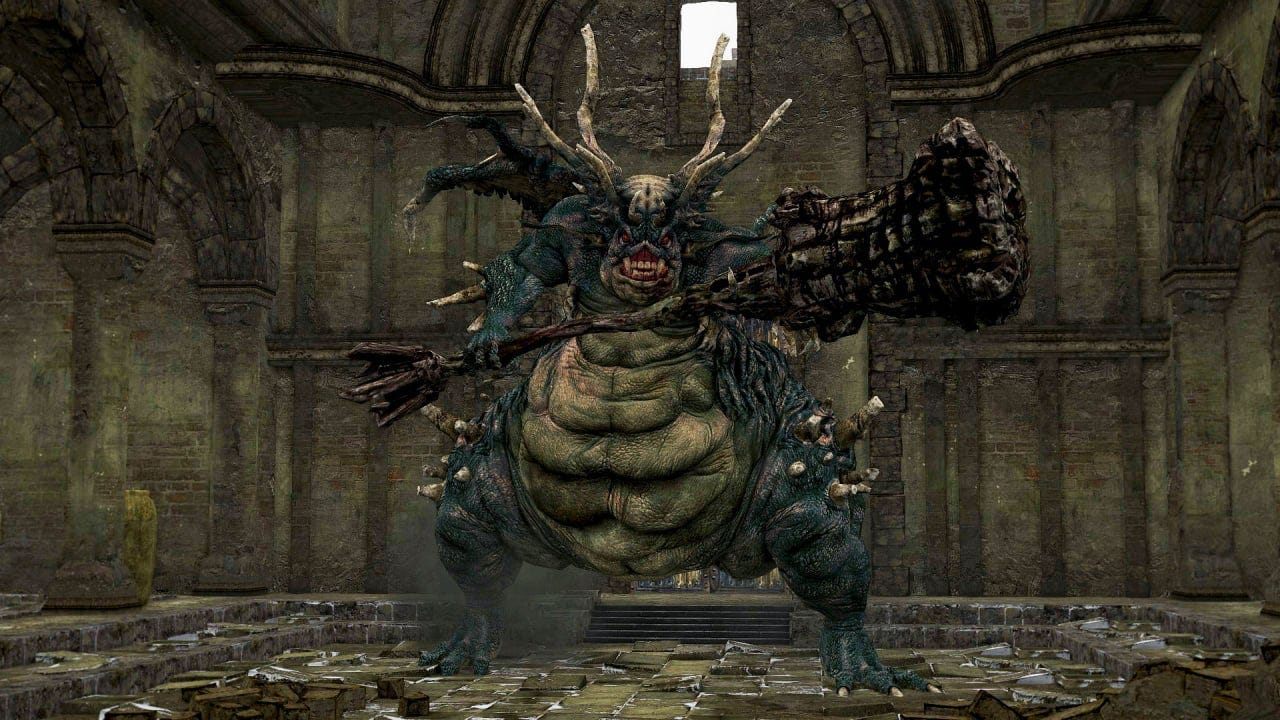
You are taught to persevere from the very start when you are confronted with the tutorial boss fight, the Asylum Demon. When it first appears, it is far beyond your abilities and you must flee to safety. But upon making your way through the Asylum, you find better equipment and you learn how to fight so that the next time you face the Demon, you prevail over it. On Steam, the achievement for reaching Lordran, which just requires that you kill the Asylum Demon, has been earned by 92% of players. So 8% of players went hollow before even making it out of the tutorial.
Even the first character you meet after escaping the Undead Asylum has all but given up. He is simply referred to as the Crestfallen Warrior. He has seen others arrive in Lordran with bold ambitions of ringing the Bells of Awakening, but all have failed, and so he gives you little hope for your quest. As you progress though, he eventually turns hollow and you must slay him to put him at rest.
Death is a key element in these games because your death is inevitable. Upon death, you will awaken at the most recent bonfire you visited and you must begin again. All enemies, with rare exceptions, will have returned even if you killed them before. You die, you restart that section of the game. Each time you push onward, you get a bit better and make it a bit further. J.R.R. Tolkien once stated in an interview that practically all human stories are ultimately about death. It is a central theme of The Lord of the Rings and, as discussed in a series of previous posts, of the Harry Potter series as well. Dark Souls is no different.
As an undead, you are cursed to die over and over again until you finally go hollow. Each death reminds you that the loss of everything you are is that much closer. Identity and memory play a much larger role in Dark Souls II, so we will explore those in more detail in the next post, but they are still crucial to the other games as well. The inevitability of change most obviously manifests in the inevitability of death. That is the ultimate change one can go through in life, whether spiritual or physical death.
In Lordran, death is merely a passing shadow under the Curse. This inevitability turns from the looming Dark to a fact of daily life. The presence, purpose, and meaning of death is thus diminished. Mankind is condemned to suffer death once in finality, and this is what contextualizes our lives and allows us to appreciate the grand narrative of history and our limited place within. Death itself is not what brings meaning to life but it contextualizes the meaning we discover in our lives.
Dark Souls is a journey that brings never-ending challenges as well as rewards when those challenges are overcome. The Chosen Undead prevails and comes to the decision to either follow in Gwyn’s footsteps and become kindling to link the fires once more, knowing that it will only stave off the long dark for a short time, or to let the fires die and accept the Age of Dark and whatever it brings. Roughly 30% of players on Steam have achieved either ending of the game. The rest went hollow.
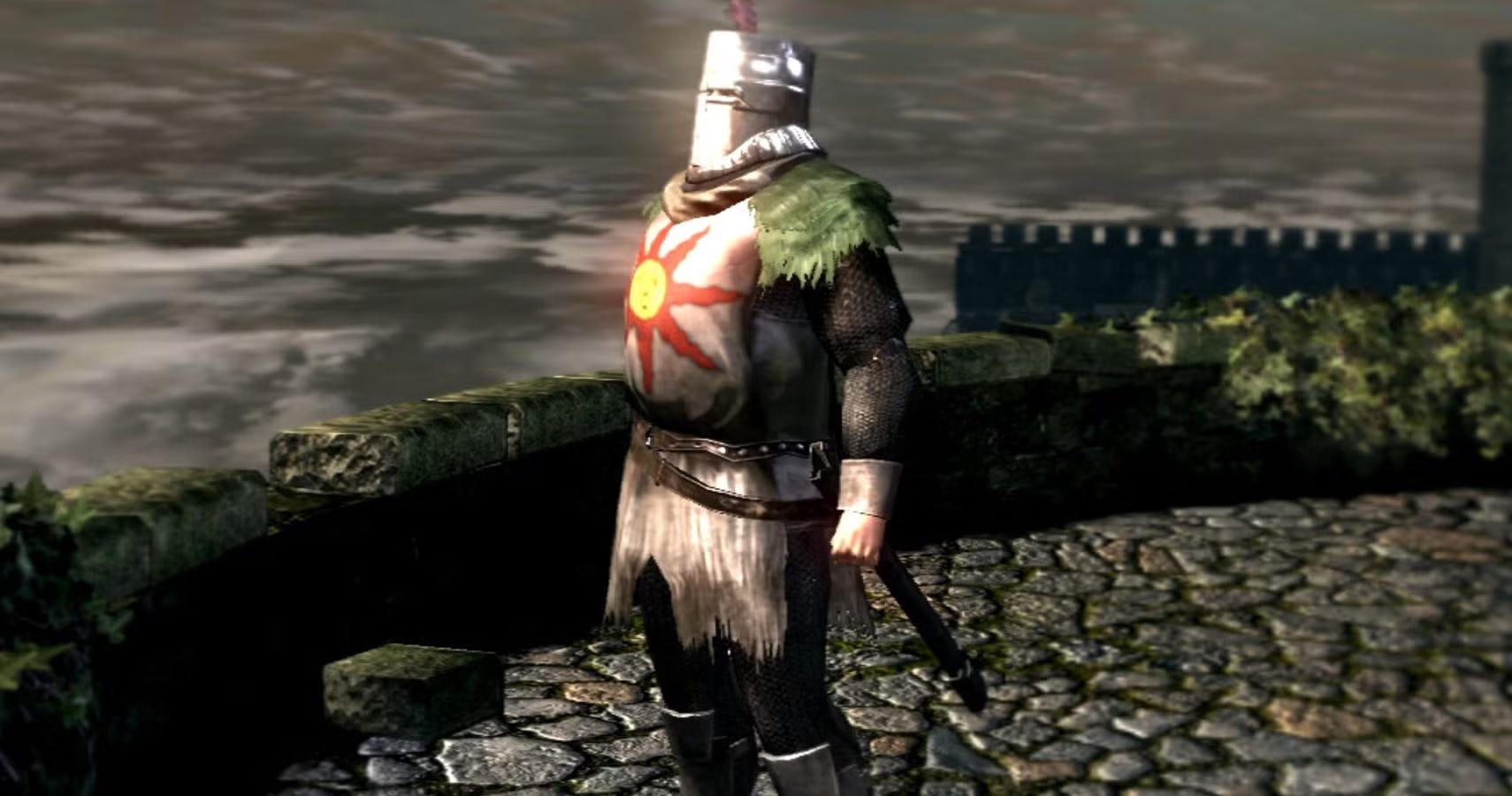
The “right answer” is never given. We don’t know what the Dark entails. We know that the Fire brings flourishing for a time and then a Curse. Gwyn feared the Dark more than he feared the consequences of prolonging the Fire. When you finally face Gwyn at the end of the game, the Lord of Sunlight and the god-king of Lordran, you find that he himself has gone hollow in his fearful desperation to preserve the Fire.
It’s a fascinating question to end with because throughout the whole journey you must continue persevering so that you do not go hollow, but at the end you must choose whether it is worth it to continue the Fire or not. Is continuing the Fire, and the Curse, what you have persevered for? Or have you persevered for the Dark so that death may return to mankind and the flames can die out, even if only for a time?
The ambiguity is crucial to the story because the story is as much about you as it is about the Chosen Undead. This journey is your journey. Should you link the Fire, then you have condemned the protagonists of the sequels to their own hardships as they struggle with the same decision at the end of eras. Wrestle with fear, uncertainty, and the inevitable unknown, but in the end make your decision.
Don’t you dare go hollow.