

With a game as revolutionary and influential as Dark Souls, no follow-up would ever be satisfactory to a significant portion of the player-base. Even though I only first played Dark Souls in 2023, there is something deeply nostalgic about it, and I can only imagine how powerful that sentiment is for those who played it from the beginning. Sequels are always a challenge to get right because you need to respect and play homage to the original while still trying to do something new.
All that said, I will assert wholeheartedly that Dark Souls II is a worthy successor to Dark Souls in many ways. It retains much that is familiar from Dark Souls while not trying to copy its predecessor. It attempts to stand on its own, and it does. As with the first one, the lore is phenomenal, but once more, we will not be diving into the lore in any real depth here. A summary of the basic lore is sufficient for a discussion of the themes.
You begin, as before, as one afflicted with the Undead Curse. In a time long after the events of the first game, you awaken in the Land Betwixt as you begin your journey through Drangleic. The Fire has been linked countless times to stave off the dark and kingdoms have risen and fallen with the ebb and flow of the Fire. This time, Drangleic, the kingdom of King Vendrick, flourished during the renewed Age of Fire until the embers once more began to fade.
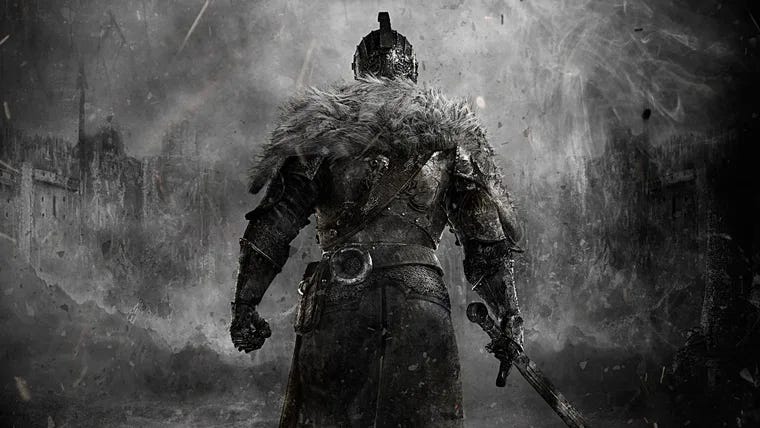
You enter Drangleic and meet a woman known as the Emerald Herald who tells you to seek the king and take your place as heir to Drangleic. Before you may have an audience with the king, however, you must acquire a greater soul. To do so, you pursue the holders of the Lord Souls or Great Souls previously collected in the first game. They have passed to new owners through the ages and must be collected once more before you are strong enough to truly become Vendrick’s heir.
Through the game you are told to seek the king so that you might link the Fire as he once sought to do. However, upon reaching Drangleic Castle, you find only his wife, Nashandra present. The king has gone missing. Deep in the crypts beneath Drangleic, you find Vendrick, guarded by his ever watchful knight, Velstadt, aimlessly wandering a darkened chamber. He has gone hollow and is now a shell of a man. The man who once battled giants and drove them out of Drangleic and who sought the Flame. You learn that he hid his soul away so that Nashandra could not corrupt it.
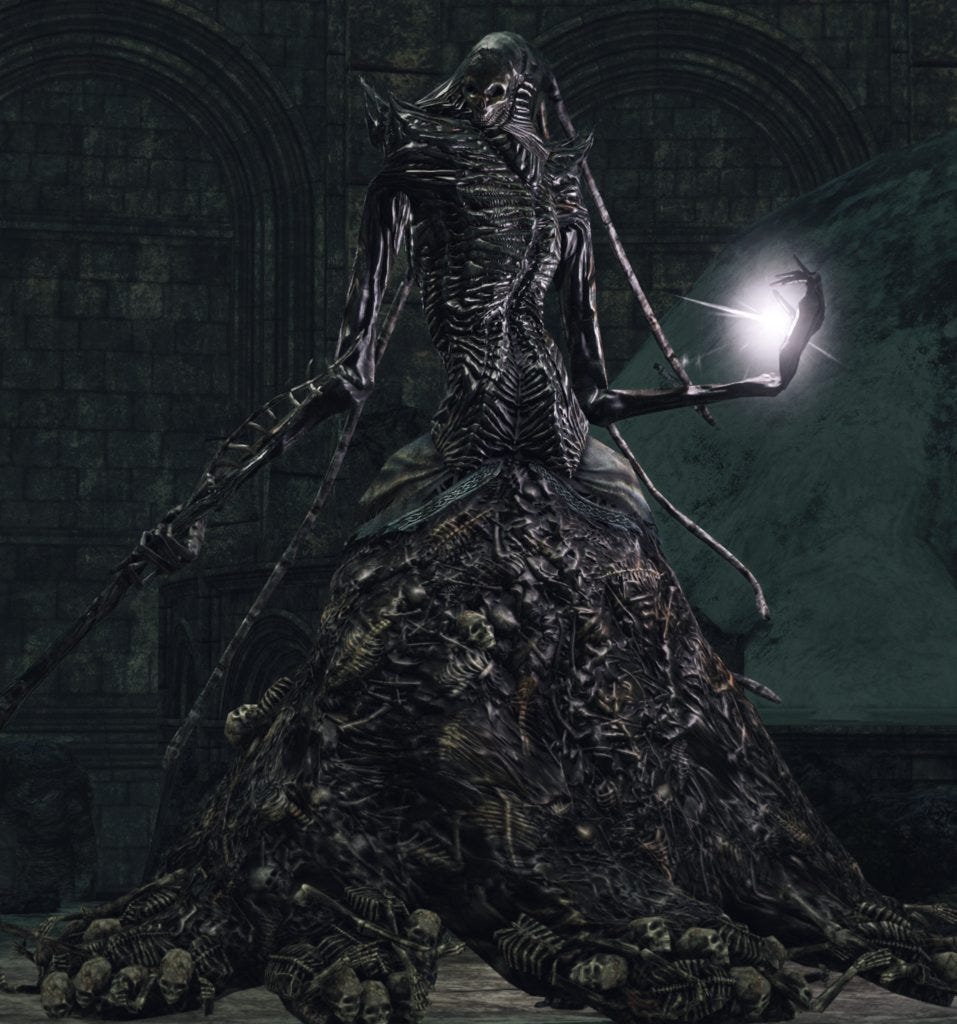
Nashandra and her sisters were Daughters of the Abyss (but that goes deeper into the lore than we need to), and each one married a king. Alongside Vendrick, there was the Iron King who became corrupted and undone by his lust for immortality. There was the Sunken King who brought doom to his people through the slumbering dragon, Sinh. And there was the Ivory King who so dearly loved his wife that she was cleansed of her dark nature. Unlike the other kings, he did not fall into corruption or flee from his post, but he gave his life to seal away the Old Chaos which threatened his kingdom.
The setting has changed but the decision remains the same: link the Fire or let it fade. Upon the throne of Drangleic this is your decision to make. Seek the kings and the Great Souls, take the throne to place the fate of the Fire within your hands, or leave it behind to strive for a cure beyond the reach of the Fire.
As you venture through Drangleic, you are repeatedly confronted by Vendrick’s brother, Aldia, who is known as the Scholar of the First Sin. The First Sin likely being Gwyn’s linking of the Fire and the creation of the Undead Curse. Aldia sought to cure the Undead Curse independent of linking the Fire, but he failed. He follows your progress and questions your intentions showing that perhaps there is another way.
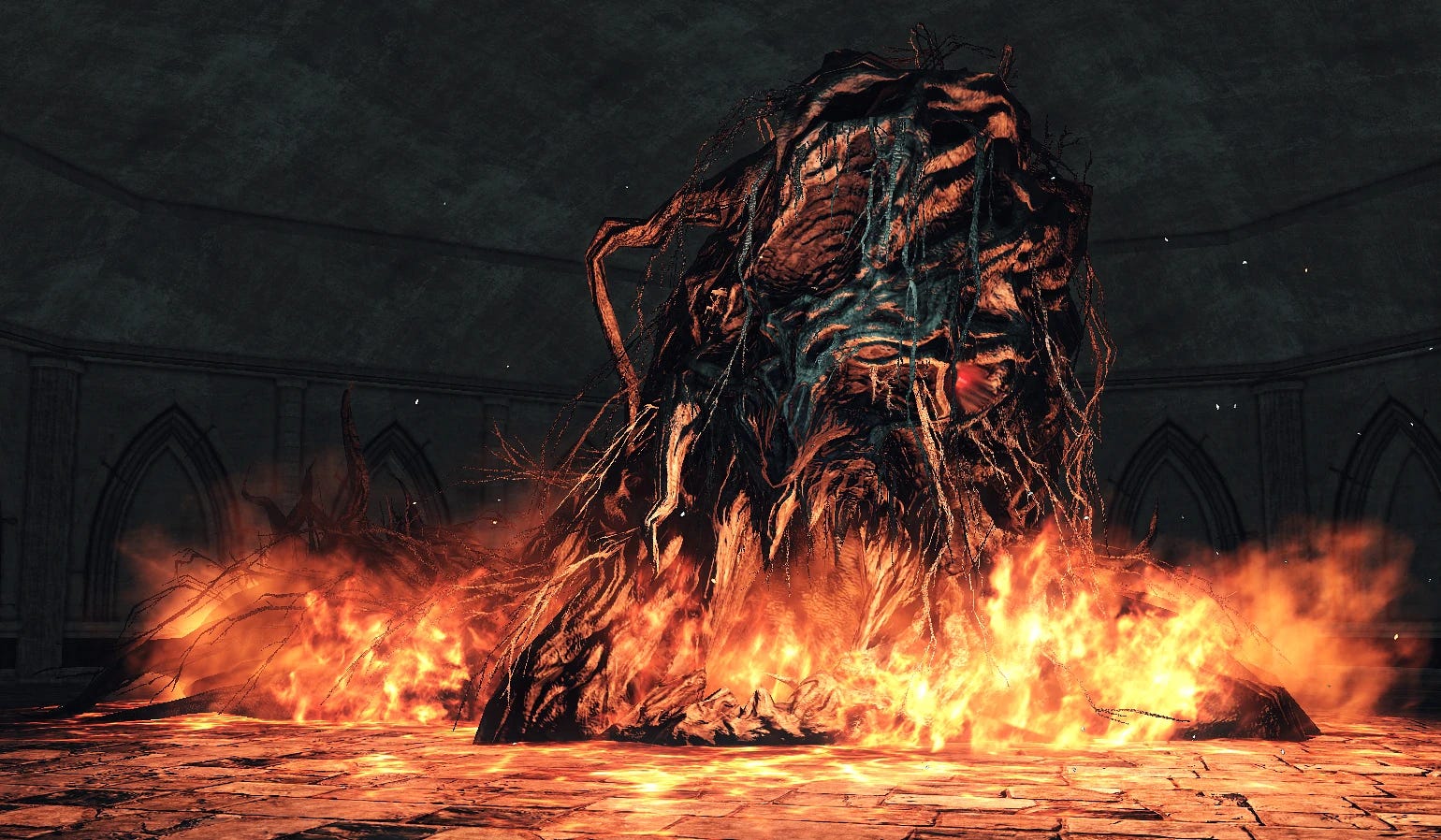
There are many overarching themes present throughout the trilogy, but each entry focuses a bit more on some than others. Dark Souls II places significant emphasis on memory and identity compared to the others (I even quoted DS2 in a paper on memory for my PhD last fall, perhaps a first for the program). As you trudge through the world of Drangleic, you meet several characters on their own journeys.
One of the most interesting among them is Lucatiel who is following in the footsteps of her brother who came to Drangleic to seek a cure for the Undead Curse. She, as well as many others you meet in your quest, slowly loses her memories as she nears hollowing. She soon forgets her reason for coming to Drangleic, her past and sense of self, and when you leave her for the final time, she fears that she will soon forget her own name. Her final words to the player:
My name is Lucatiel.
I beg of you, remember my name.
For I may not myself…
Dark Souls II (and the whole trilogy to an extent) has been described as a metaphor for depression and dementia, and the struggle to overcome suffering. You are in a land forgotten by itself, seeking renewal through ancient souls, seeking a fate that you do not understand, and all the while you cannot recall when or how you came to be in this place.
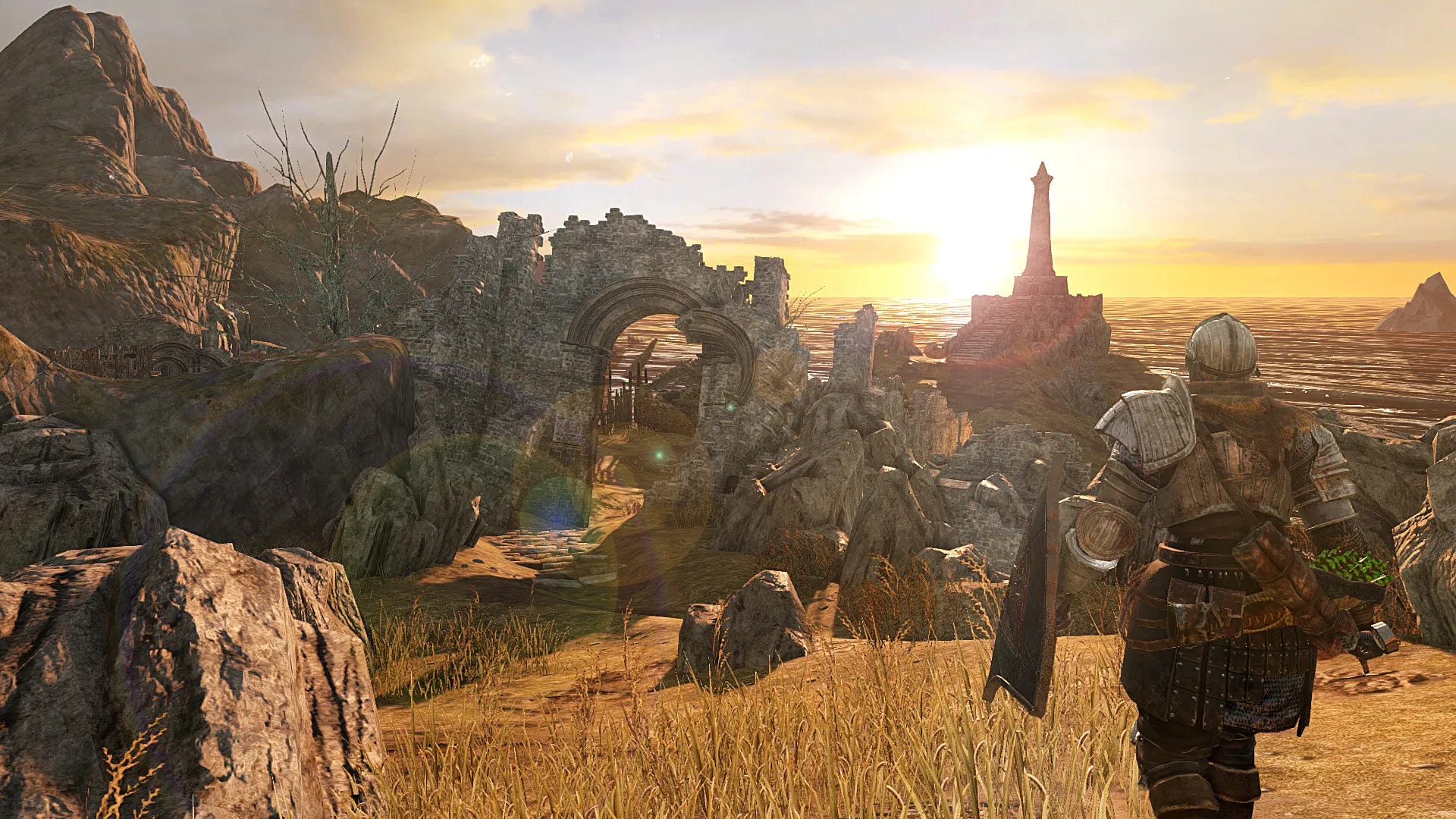
This emphasis on memory and the search for identity connects with another major concept explored in the game, that of destiny or fate. Aldia repeatedly questions the fate of the undead and the nature of life. As you near to the end of your journey, he asks you how you intend to deal with your fate and the fate of all undead:
All men trust fully the illusion of life.
But is this so wrong?
A construction, a facade, and yet...
A world full of warmth and resplendence.
Young Hollow, are you intent on shattering the yoke, spoiling this wonderful falsehood?
It is the fate of the undead to have death, and therefore life, robbed of them. Their life is an illusion because it does not end with death but instead lingers until they are no longer themselves. This is the fate of hollowing, that you lose who you are but remain undying. Aldia sought to break the wheel of fate so that the cycle of linking the Fire might end. His brother, Vendrick, once believed the Fire was his destiny until he fled to prevent his own corruption. Hollowing, instead, was his fate.
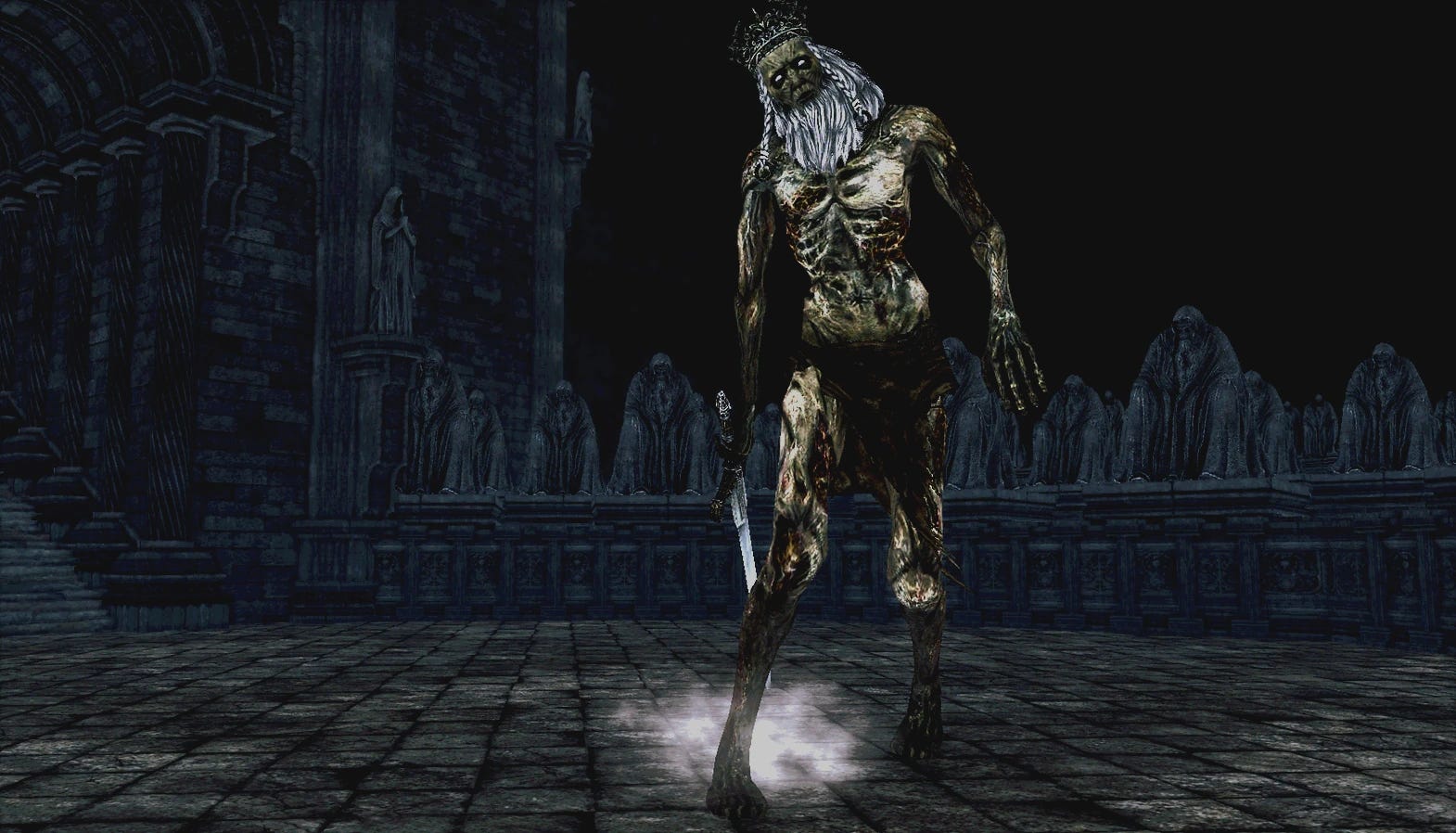
With the stories of these kings, we see a critique of power. Three of the four failed in their duties either due to fear, foolishness, or ambition. Vendrick feared Nashandra’s corruption and abandoned the throne. The Iron King sought immortality for himself, his power, and his empire which only led to the destruction of all three. And the Sunken King brought ruin to his kingdom when he brought them to worship Sinh, the Slumbering Dragon, leading to their inevitable end as the dragon woke. Only the Ivory King passed the test of power, the others were all found wanting.
The Ivory King gave his own life to stop the Old Chaos. He did not risk his people for his own gain and he did not abandon them in the face of danger. If we add Gwyn to this list as well, the Ivory King remains the only one who did not fail in the use of his power. Gwyn feared the dark to such an extent that he cursed all of the humanity with undeath to keep the Fire alive just a little longer. This critique of power is present across all three games, but Dark Souls II is the clearest with its exploration.
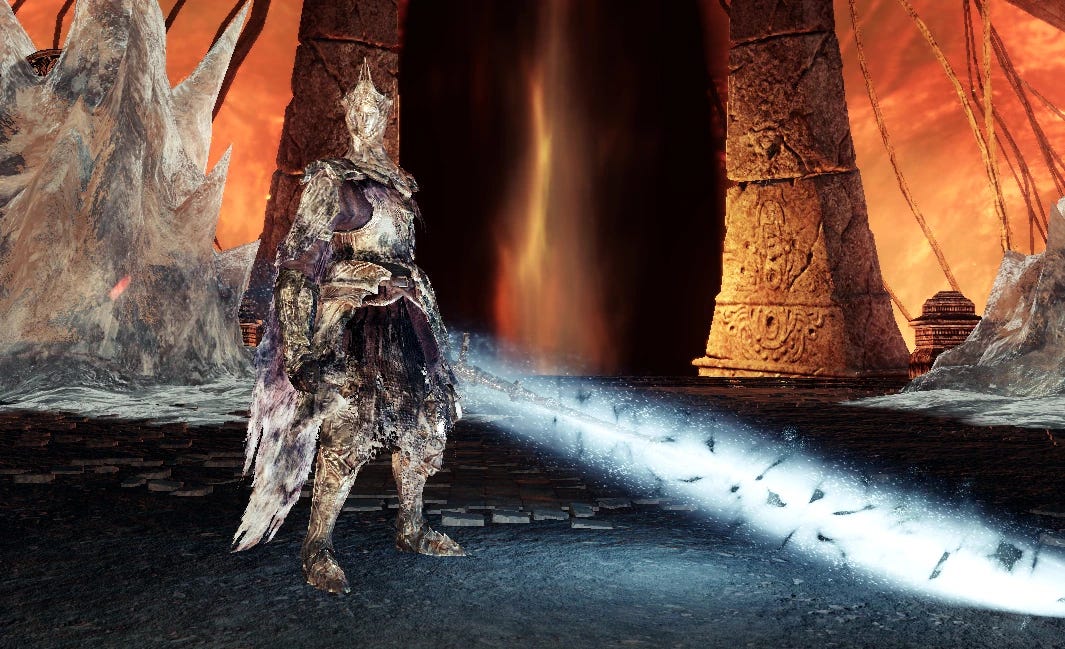
All this leads to the question of who we seek to be. As memory and identity fade, as our fate reveals its inevitability, as we struggle with the choices given to us, we become who we always truly were. When speaking with the Emerald Herald near the beginning of your journey, she tells you what is required for you to be worthy to take the Throne and make the choice:
Bearer of the curse, seek misery.
For misery will lead you to greater, stronger souls.
You will never meet the King with a soul so frail and pallid.
To be magnanimous is to possess a “great soul.” The cultivation of virtue requires suffering and the embrace of life’s difficulties so that they might be overcome. Comfort does not produce greatness, discomfort and the disquiet mind do. Hardship and suffering bring perseverance, trials bring resilience, and pain brings endurance. All great meaning in this life is not found easily and cannot be grasped without effort. To find joy and peace, one must suffer despair and war first. Even if one’s struggles are not epic in proportion, they are necessary features on the path to eternity.
Seek misery, but don’t you dare go hollow.
Bearer, seek, seek, lest