

Is there a movie you saw during childhood that you lost track of and could never find again? For me, I watched a movie on TV somewhere in the age range of 8-10 and absolute loved it. It was about a man who was the sole survivor of a major accident, having survived without a scratch. After returning home, he was contacted by someone who believed that he must possess some superhuman ability in order to have survived. For years I didn’t know the name of the film, not until a successful Google search led me to the IMDB page for M. Night Shyamalan’s Unbreakable. A sigh of relief and another search later, and my disappointment broke new grounds. I couldn’t find it available anywhere to watch.
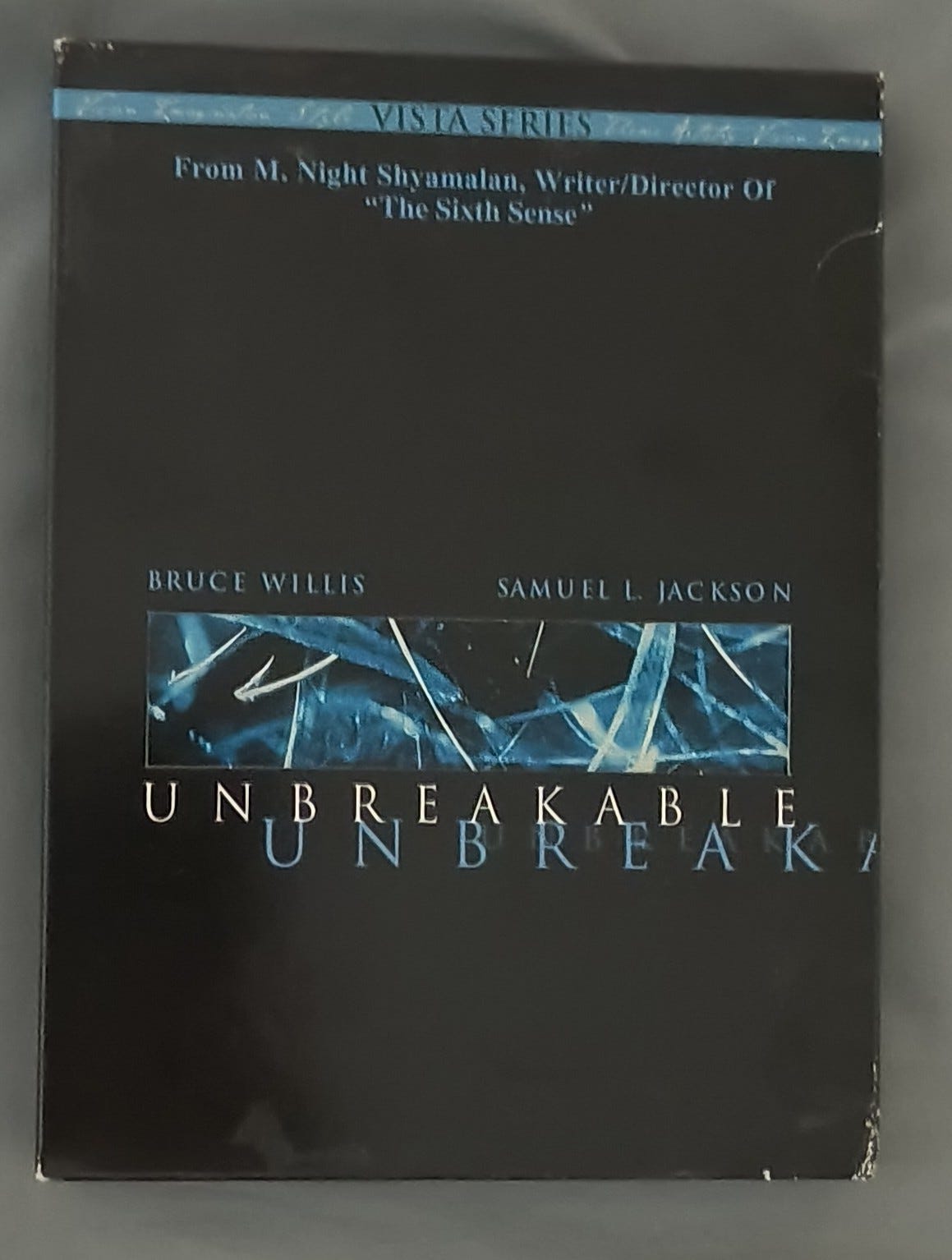
I knew which movie it was though, and that was good. It popped into my mind fairly often when I would think about my own story ideas or even about bits of life. Something about it just stuck with me, but I couldn’t explain exactly why, because I’d only seen it the one time. A few scenes, lines, and images from the movie became ingrained in my imagination. One thought that I consistently had about it was that it was a real shame that more was never done with the film. A movie like that deserved a sequel, I thought. The character needed to return somehow, but by that point it had been the better part of twenty years since the movie’s initial release in 2000. It was too late.
Fast forward to 2018. A couple friends and I had a bonfire one summer night as a sendoff before I left for Scotland to begin graduate school. The conversation eventually shifted to horror movies, as it often does, and they began talking about a movie called Split. It sounded interesting, so I asked them about it. I was sold on the plot right away, but then they mentioned that it was a backdoor sequel to another Shyamalan movie from a long time ago.
The pure and impossible coincidence that it was connected to Unbreakable just floored me. I hadn’t even heard of Split when it was coming out, but more so the fact that a backdoor sequel to Unbreakable had snuck by me two years before was astonishing. I went home from that bonfire and found, through unsavory methods, both films online for free. Needless to say, I went to bed late that night.
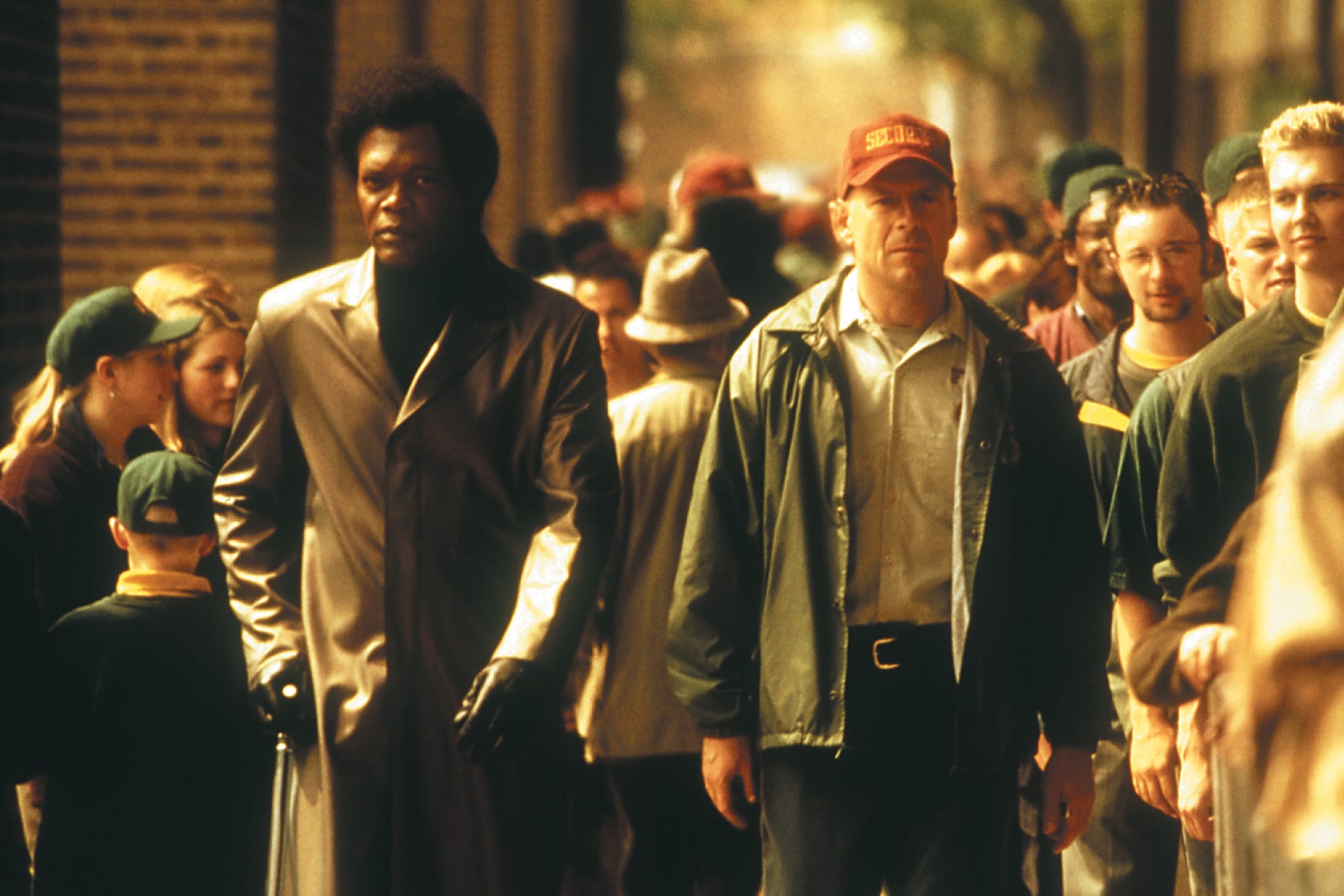
Having watched Unbreakable multiple times since then, I now have a better idea of why it stuck with me for so long and why I wanted more. A major theme in the film is that of longing, or yearning for something more. Spoiler alert from here on out. The main character, David Dunn, moves about the events of the film as though he’s in a depressive fog. He’s gone most of his life without finding a real sense of purpose. He awakes in the hospital at the beginning of the story and learns that he is the sole survivor of a train crash, and that he has no physical injuries. Meanwhile, Elijah—a man born with osteogenesis imperfecta, or brittle bones—reaches out to David after the accident, inquiring about the nature of David’s survival.
During a conversation with Elijah he describes this as a sadness he wakes up with each morning. Of course, David finds himself drawn to helping others by working in security, but nothing quite satisfies that sadness. Their relationship is complicated throughout the film as David does not initially believe Elijah’s proposal that there is something superhuman about David’s survival.
As he comes to accept the reality of his abilities—apparent invincibility save for drowning, enhanced strength, and the ability to have brief visions of a person’s past or present crimes—David asks Elijah what he needs to do. Elijah tells him to go to where people are, and that it won’t take long. At the end of the film, once David has rescued a pair of children from the man who had murdered their parents, he goes to speak with Elijah. In the conversation Elijah asks David if he woke up that day with the same feeling of sadness. David answers no.
In a moment of vulnerability, after revealing himself as the terrorist who orchestrated the train crash David had been in, Elijah explains how he has also felt that sadness and aimlessness throughout his life. He states that it’s “just an awful feeling” to not know your purpose or place in this world. Elijah, in suffering from osteogenesis imperfecta, had come to believe that someone on the opposite of that spectrum must exist. Someone whose bones do not break. Both men had a deep, lingering sadness over not understanding their respective destinies. In the end, David understood that he was meant to help people, while Elijah tragically determined that he was always meant to be the villain. The movie is ultimately centered around the search for meaning in our lives and our ability to pursue what we understand to be our purpose.
That lingering sadness arrives when we live contrary to, or outside the scope, of what we find most meaningful. Elijah’s sense of aimlessness was in feeling like a mistake, feeling alone in a world that he didn’t belong to. He needed to find a reason for his own suffering. David’s came from not understanding his path in life or how to utilize his gifts. The men are simultaneously the same and opposite. Elijah is physically fragile, while David is unbreakable. Yet they both suffer from a yearning for more in their lives.
More than just about any other film I’ve seen, Unbreakable taps into that yearning. It’s a feeling I think most people experience at least once in their lives. In a day and age when career options seem endless yet impossible to obtain, there’s a very real sense of wanting to do something more in your life, wanting to achieve something or do something great. We can look to history with a romantic lens and find stories of great figures who built empires and changed the destinies of their nations before age 30. But what have we to do now? How do we effect change in the world today, despite being seemingly freer?
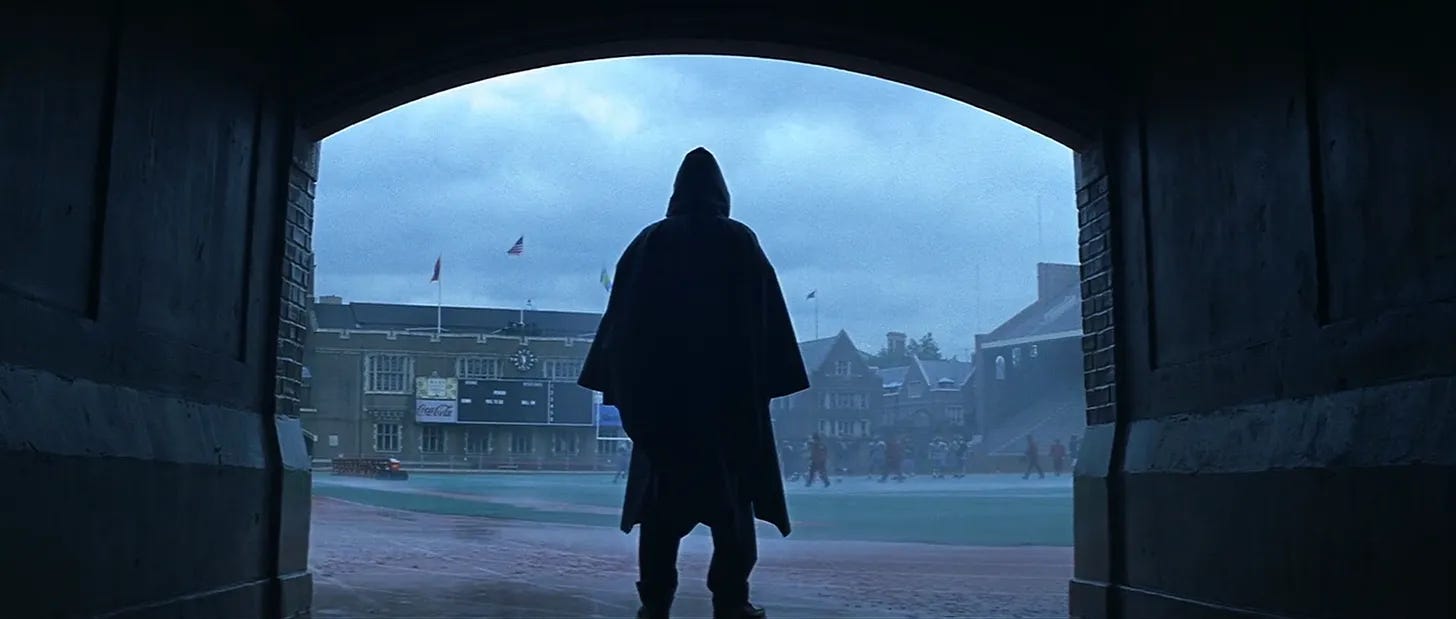
In the midst of our apparent options and opportunities, the ability to grasp at meaning and purpose in life is slipping away from many people. There’s a real sense of nostalgia at the heart of superhero media, something which Unbreakable tapped into a bit more subtly, and many years prior to the Marvel phenomenon. Not only is there a desire for heroic figures we can look to for inspiration, but there is a desire inherent in mankind to be heroic ourselves.
What is difficult to remember, is that even a simple life with a devoted marriage and deep bonds between parents and their children is oftentimes heroic enough. At the end of Unbreakable, it is not only David’s realization that he has the power and ability to save people which heals him of that sadness. His relationship with his son has been healed, and his marriage is working toward a similar level of healing.
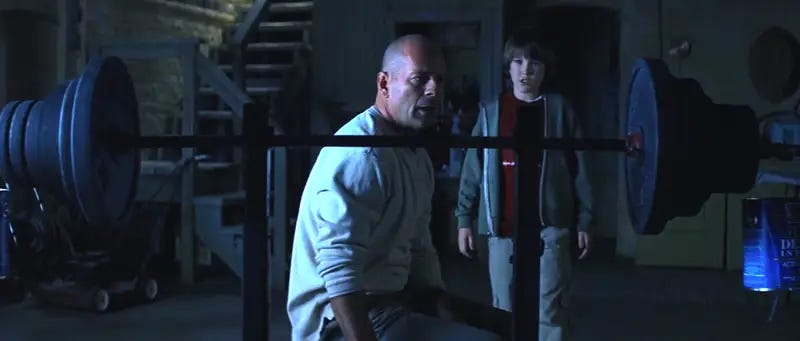
When the film begins, David and his son are distant, almost cold with one another. His son, Joseph, is clearly uncomfortable and afraid each time they speak—not due to an abusive relationship, but due to the natural fear a son has toward a father who has become a stranger. David’s role as father is what ultimately inspires his pursuit of heroism. Joseph believes in David far more than anyone else, even once in an emotional outburst trying to shoot his father to prove his invincibility. As the film goes on, the softening of their dynamic coincides with David’s understanding of his own abilities.
This is not to say that all meaning stems from becoming a parent or spouse, though those are both incredibly important roles that may and should provide a great deal of meaning. It means that there is heroism in the seemingly mundane elements of life. Being a loyal friend, a devoted spouse, an inspiring teacher, or a good and active parent is meaningful and heroic. Whatever your hands and mind find to do, do your very best and seek what is enduringly meaningful rather than fleetingly enjoyable. Unbreakable is ultimately a superhero origin story, but it feels like a family drama at times. It is not flashy or larger than life like others of the genre, but it embodies the ideas and yearnings that still remain in many of the films released today.
David’s yearning to help people ultimately started with the repairing of his familial relationships. He came to understand that his purpose was outwardly focused, that the sadness leaves when he forgets himself and looks to how he can serve others. Elijah’s yearning came from a constant remembrance of self and personal suffering. David was merely the key to Elijah’s own destiny.
The pursuit of meaning in life is found in the realization that our lives aren’t really about us at all. Our accomplishments might be remembered, but not in the context of how we accomplished them. They will be remembered by the way they impacted others. At the heart of Unbreakable is the understanding that life is best spent in service to others, whether in the context of your family, your work, saving people as a superhero, etc. If we were to inhabit this world alone, it would be nigh-impossible to discover any lasting sense of purpose or meaning. Our bonds with others help to draw meaning into our lives.
We’re called to take on the burden of being and move forward, but helping to shoulder a friend’s burden is often when we feel most fulfilled.