

Those of us who dwell in fairyland are able to see the world as it truly is, without the disenchantment and self-imposed blindness afflicting most others. There is freedom and wisdom in returning to the things we understood as children but have since forgotten in adulthood. As children, we knew that monsters preferred the dark and that only the very foolish would walk slowly up the basement stairs once the lights have gone out.
We knew that the creaking of the house was it settling in for a nap, and that chairs grow uncomfortable when they are tired of being sat on. When we return to fairyland, our eyes open once again to the magic that surrounds us and we realize what had been stolen from us through an immature attempt at maturity.
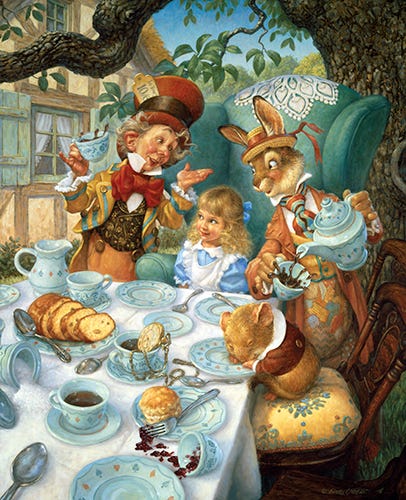
When we read stories as children we understood that they were real, just as real as anything else in the world, but we also understood that they are different in their reality. Our unfamiliarity with the world as children allows us to see how large and wondrous it is, though of course we see the dangers present. There are dragons, goblins, and monsters in the dark and to ignore them is foolish.
As we grow older, however, we find ourselves assured of our knowledge of the world and we leave behind the magic we once saw around every corner. We begin to believe that the monsters are simply shadows, the heroes are contained within stories, and adventures belong to the distant past or worlds other than our own. We begin to see these as no more than figments of our imagination as though the imagined is somehow unreal.
I recall being at a restaurant once and hearing a young boy ask a server which brick on the far wall opened up the secret passageway. There was no question about whether or not such a passageway existed, it was simply known. The only question was how to gain access.
This server told him that she was not given access to the passageway and unfortunately could not tell him which brick would work. While many adults may have “played along” with the boy, few would truly believe alongside him. It feels silly to do so because of course there’s no secret passageway because such things either do not exist or would be found in places like old castles or the White House, not a local restaurant.
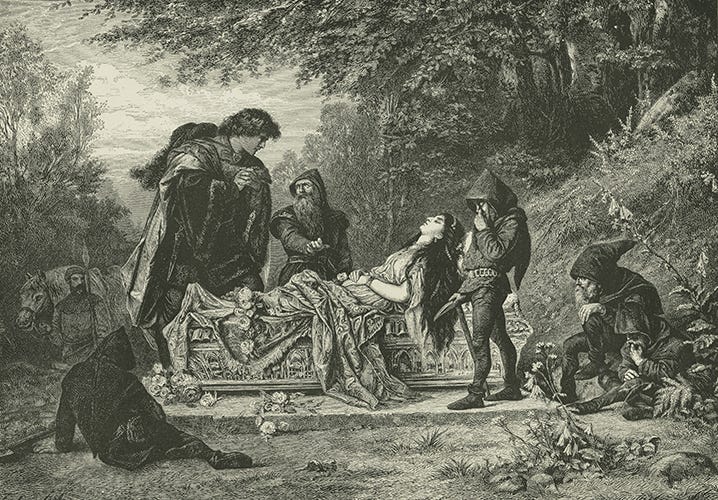
I will admit that I was not always of the mind to accept fairyland. It was combination of factors, both human and providential that opened my eyes. I now see that fairyland is indeed more real than the world most of us are used to dwelling in. We are told that the imaginary is simply “make believe” because we pretend that something is real when it must not be.
Why though? Why should we accept that there is not, in fact, a brick in the wall that might lead one on an adventure to another land? Is the adventure any less real simply because it is found in our imaginations? Of course not. To imagine is to create. It is to embrace the world as it is and to not rob yourself, or others, of the wonder that remains even if we have not allowed ourselves to see it.
In fairyland, we see the beauty of the world alongside the ugliness. The beauty of the princess is matched by the ugliness of the witch. The valiance of the knight is matched by the cruelty of the dark lord in his dark tower. G.K. Chesterton noted that fairy-tales are not responsible for showing dragons to children, they instead show that dragons can be defeated. This is echoed by C.S. Lewis in his essay “On Three Ways of Writing for Children”: “Because it is so likely that children will meet cruel enemies, let them at least hear stories of brave knights and heroic courage.”
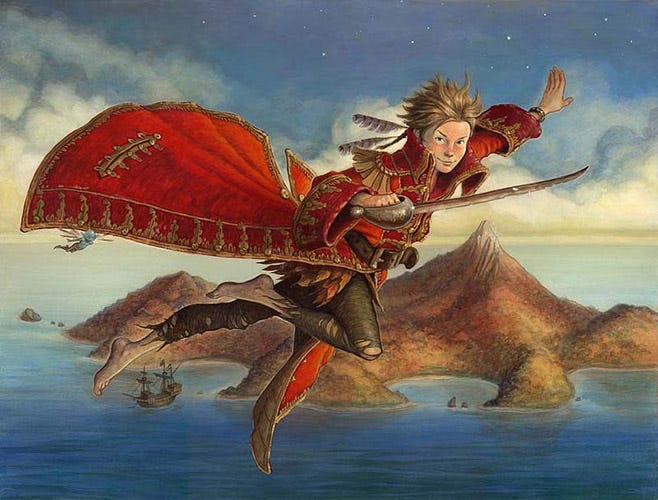
There is no illusion to fairyland, fairies are instead fond of enchantments. It is not an idyllic utopia disconnected from the realities of the created order. Fairyland is part of the created order and thus is home to heroes and scoundrels alike. G.K. Chesterton wrote in Orthodoxy:
It might be stated this way. There are certain sequences or developments (cases of one thing following another), which are, in the true sense of the word, reasonable. They are, in the true sense of the word, necessary. Such are mathematical and merely logical sequences. We in fairyland (who are the most reasonable of all creatures) admit that reason and that necessity.
When we return to fairyland, we do not return to ignorance of the world as though we are small children who are experiencing the world for the first time, instead we see the world without the illusions of disenchantment. In fairyland, all things return to their fundamentals, their most archetypal and primal realities.
As I said in “The Princess and the Knight,” these stories display the feminine and the masculine in their purist forms, in the forms that we should all desire to fulfill. Fairyland washes away the illusions of the mundane and returns us to the clarity of the enchantment under which we were made. To be enchanted is not to be deluded. Enchantment is not illusory, disenchantment is. Gazing at the moon and admiring its beauty is truer and more serene when you understand that the moon wants to be admired. More from G.K. Chesterton:
Now, the fairy-tale philosopher is glad that the leaf is green precisely because it might have been scarlet. He feels as if it had turned green an instant before he looked at it. He is pleased that snow is white on the strictly reasonable ground that it might have been black. Every colour has in it a bold quality as of choice; the red of garden roses is not only decisive but dramatic, like suddenly spilt blood.
The moon is beautiful by its very nature, and it chooses to display it awe-inspiring presence in the night sky. It does not always choose to do so, but it is important to recognize it when it does. When one admires a beautiful woman, or tells her that he loves her, he is doing so because it is right and true. Not to do so would be a crime against the Good. Her beauty is her own, yet it is also something much deeper, and we see that more clearly when we understand that she is a princess in fairyland who casts light against the darkness.
The expression of her beauty, like that of the moon, is a choice, though she does not decide to be beautiful because that is intrinsic to her and the moon alike. The sun does not choose to be radiant or powerful, but it chooses when to express its power and to what extent. Returning to fairyland allows us to see the freedom of the world around us and to better admire the wonder present therein.
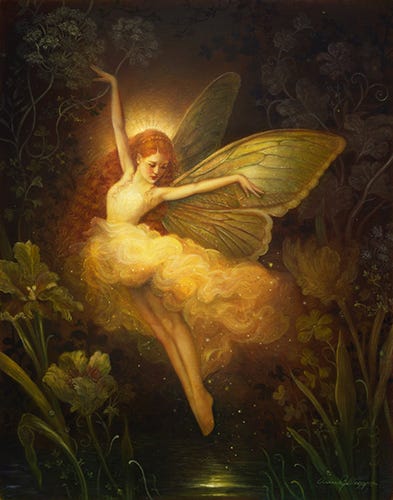
Fairyland returns the imagination to its proper place of providing and discerning meaning within the world. When our imaginations are subject to illusions, we find them trapped within cliches and stale ideas that do not stir our hearts to adventure. We find ourselves unable to appreciate the world around us for what it is, a living work of art which has been granted freedom by the Artist.
The expression of this freedom is found in fairyland. We may learn the cold processes of nature through science, but we will not grasp the true beauty of the freedom of the trees and their changing colors without returning to fairyland. We will not hear the songs of praise sung by birds without the enchantment of fairyland, instead we will hear only mating calls.
Find the brick and enter the secret passageway that leads to fairyland and adventure. Speak with a child, a harbinger of fairyland wisdom, and be renewed in your search for beauty and wonder.