

The Goblet of Fire ends with the death of Cedric Diggory. Harry has now properly been introduced to death. Before, death was a stranger Harry had only glimpsed or heard stories about. Now, death has revealed himself in Harry’s life by striking down a boy only just older than Harry himself. The shadow of death materializes and the intangible becomes tangible. Death now has a face. Death’s face is the blank expression painted over Cedric as he falls to the ground, ignorant of his own demise. Death is the hollow shell of a former friend.
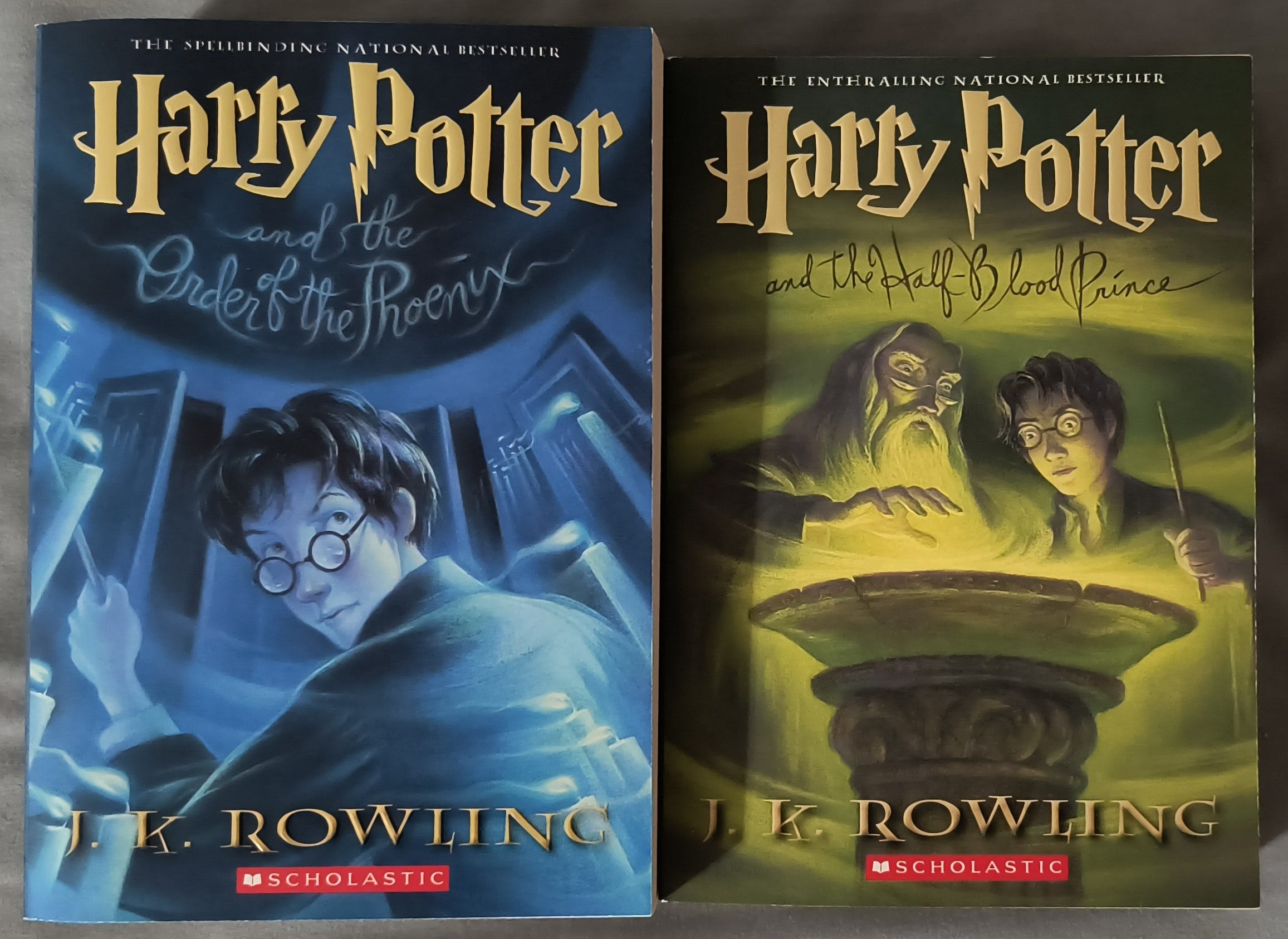
As a result of his new acquaintance with death, Harry is changed. A simple but direct way that this is seen is the fact that Harry now sees thestrals. Throughout The Order of the Phoenix they act as a reminder that death has not only touched his life, but that he has met death in person and seen the reaper’s handiwork with his own eyes.
The thestrals are not evil, and their connection to death is never truly explained, but within the narrative they serve as a visual representation of Harry’s lost innocence. Sure, he had lost his parents and had been abused by his aunt and uncle throughout his childhood, but those did not rob him of his innocence in the same way as watching a friend die right before him. He is still a child in the first four books. A child with trauma, yes, but a child. Now he is a young man who can put a face to the trauma of his nightmares. And unfortunately for Harry, his first meeting with death was followed quickly by a second.
It seemed to take Sirius an age to fall. His body curved in a graceful arc as he sank backward through the ragged veil hanging from the arch…
And Harry saw the look of mingled fear and surprise on his god-father’s wasted, once-handsome face as he fell through the ancient doorway and disappeared behind the veil, which fluttered for a moment as though in a high wind and then fell back into place.
Harry heard Bellatrix Lestrange’s triumphant scream, but knew it meant nothing—Sirius had only just fallen through the archway, he would reappear from the other side any second… (The Order of the Phoenix, 806)
Now death shows himself again. First the shadow of family in the deep recesses of Harry’s mind, then a friend face-to-face, and now the only family he felt he had left. In each case, death draws closer to him and he has been helpless to prevent it. But now the instrument of death is within his reach. The perpetrator is in sight. He chases down Bellatrix and attacks her, but to no avail, leading to the battle between Dumbledore and Voldemort. This scene is especially notable due to the conversation between the two as the duel continues.
“You do not seek to kill me, Dumbledore?” called Voldemort, his scarlet eyes narrowed over the top of the shield. “Above such brutality, are you?”
“We both know that there are other ways of destroying a man, Tom,” Dumbledore said calmly, continuing to walk toward Voldemort as though he had not a fear in the world, as though nothing had happened to interrupt his stroll up the hall. “Merely taking your life would not satisfy me, I admit—”
“There is nothing worse than death, Dumbledore!” snarled Voldemort.
“You are quite wrong,” said Dumbledore, still closing in upon Voldemort and speaking as lightly as though they were discussing the matter over drinks. Harry felt scared to see him walking along, undefended, shieldless. […] “Indeed, your failure to understand that there are things much worse than death has always been your greatest weakness—” (OotP, 814)
It’s during this conversation that Voldemort’s fear of death is laid out clearly in his own words. For him, death, the end to his earthly existence, is worse than any other fate. Worse even than becoming a disembodied spirit for years. Part of this is certainly due to his narcissism, as he cannot allow the chance that his presence on earth might somehow end, and it also manifests in his desire to be special or set apart from others.
In his first interaction with Dumbledore as a child, Voldemort learns that he is special already due to his magic, but this does not satisfy him. He wishes to be unique even among those who possess magic. His fear of death is a manifestation of that desperate grasp for power. Dumbledore, echoing statements made to Harry at the end of The Philosopher’s Stone, retorts that there are absolutely fates worse than death. Men can be destroyed utterly in this life, making death seem preferable.
And then Harry’s scar burst open. He knew he was dead: it was pain beyond imagining, pain past endurance—
He was gone from the hall, he was locked in the coils of a creature with red eyes, so tightly bound that Harry did not know where his body ended and the creature’s began. They were fused together, bound by pain, and there was no escape—
And when the creature spoke, it used Harry’s mouth, so that in his agony he felt his jaw move….
“Kill me now, Dumbledore….”
Blinded and dying, every part of him screaming for release, Harry felt the creature use him again….
“If death is nothing, Dumbledore, kill the boy….”
Let the pain stop, thought Harry. Let him kill us…. End it, Dumbledore… Death is nothing compared to this….
And I’ll see Sirius again…. (OotP, 816)
Here we see how Harry in his agony both from losing Sirius and being possessed by Voldemort deems death as preferrable to such suffering. Death seems to him peaceful and a release from pain, not a consuming void. Here, his fear is not of death but of having to suffer in the wake of another loss. He has hope in reunion with his loved ones and this hope enables him to see Voldemort’s fate for what it is: something worse than death. The connection between them illuminates this fact during this possession sequence.
Voldemort here knew that Dumbledore would not kill Harry. Voldemort believed that Dumbledore was deluded to think that something might be worse than death, so Dumbledore’s refusal to kill Harry in order to ‘end’ Voldemort seems to prove his point, at least in his mind. In the end, it is Harry’s love for Sirius and desire to be reunited with him in death that forced Voldemort to flee or else, ironically enough, suffer pain worse than death. Voldemort’s inability to reflect honestly on life and his own inevitable death blinds him to a true understanding of the events surrounding him.
After this experience at the Ministry of Magic, questions of death continue swirling as Harry approaches Sir Nicholas, asking him about ghosts.
“Wizards can leave an imprint of themselves upon the earth, to walk palely where their living selves once trod,” said Nick miserably. “But very few wizards choose that path.”
“Why not?” said Harry. “Anyway—it doesn’t matter—Sirius won’t care if it’s unusual, he’ll come back, I know he will!”
And so strong was his belief that Harry actually turned his head to check the door, sure, for a split second, that he was going to see Sirius, pearly white and transparent but beaming, walking through it toward him.
“He will not come back,” repeated Nick quietly. “He will have…gone on.”
“What d’you mean, ‘gone on’?” said Harry quickly. “Gone on where? Listen—what happens when you die, anyway? Where do you go? Why doesn’t everyone come back? Why isn’t this place full of ghosts? Why—?”
“I cannot answer,” said Nick.
“You’re dead, aren’t you?” said Harry exasperatedly. “Who can answer better than you?
“I was afraid of death,” said Nick. “I chose to remain behind. I sometimes wonder whether I oughtn’t to have…Well, that is neither here nor there… In fact, I am neither here nor there…” He gave a small said chuckle. “I know nothing of the secrets of death, Harry, for I chose my feeble imitation of life instead.” (OotP, 861)
Once again, the fear of death was the primary contributing factor. Sir Nicholas chose to cling on to what he calls a ‘feeble imitation of life’ rather than risk the great beyond. The dead know little of death, and ghosts can only grasp at life. This hearkens back to the death day party where the ghosts attempt to recapture the living pleasures of food by drifting through rotten piles of it on platters, hoping the stench would translate to something meaningful. They lose the very thing they were afraid of losing. Sirius may have been a relatively young man still, or at least a young man in a withered man’s body, but he had no fear of death and would not cling to the edges of life.
Voldemort, for all his work to undermine and escape death, ultimately knows little about it. So great is his fear that he has never been able to comprehend what it is he flees from. He chooses his own feeble imitation of life, perhaps one even feebler than that of the ghosts. Sir Nicholas must wander the corridors of Hogwarts and watch as students grow older and live fully, but he can never truly join them. Voldemort may not care to be set apart from others in such a way, but it ultimately shows that his life is as hollow as the existence of Sir Nicholas, or even more so.
Harry comes to a greater understanding of what it means for a person to embrace death within The Half-Blood Prince. Though it will take more time, this is the book where he begins to see death for what it is, simply a transition from this world to something else. Upon learning of Voldemort’s horcruxes, Harry realizes the desperate terror that Voldemort has for death. The fact that he is willing to tear apart his own soul and to murder others, to exist as a phantom for years after his curse rebounded, indicates a pathological fear of that great enemy beyond any person’s control.
Death comes for all. It is the great equalizer, and Voldemort could not possibly be made equal to another person or to allow his fate, his power, to fall outside of his control or be left to an unknown. This is noted by Dumbledore when the Elixir of Life is referenced once more, stating that Voldemort would likely have resented his dependence on the Elixir after a time, choosing instead to rely on his horcruxes, his own work.
Throughout this conversation, Harry begins to see that death is not something we ought to center our lives around. We will die, it’s a brute fact of existence. Acknowledging and accepting this fact is the key to not being ruled by it. As they discuss the nature of the prophecy and that one must kill the other, Harry takes an early step toward understanding how death might truly be overcome.
But he understood at last what Dumbledore had been trying to tell him. It was, he thought, the difference between being dragged into the arena to face a battle to the death and walking into the arena with your head held high. Some people, perhaps, would say that there was little to choose between the two ways, but Dumbledore knew—and so do I, thought Harry, with a rush of fierce price, and so did my parents—that there was all the difference in the world. (The Half-Blood Prince, 512)
Dignity in life and dignity in death, desperation for control, and fear of the unknown abound within the series. It is through these that we also find the key to fates worse than death. Desperately clinging for life is undignified as it rejects the natural end of this earthly existence, but throwing one’s life away is equally undignified. Standing before death unafraid, with hope in the what is to come, is a true step on the path to being free of death.
As Dumbledore suffers from the effects of the horcrux potion in the cave, he cries out with anguished regrets and begs for the relief of death. Unknown to the reader at this point, Dumbledore is experiencing his regret over the death of his sister, Ariana, and the events surrounding Grindelwald’s rise to power.
Unleashed with no barriers of reason and purpose, these agonies became overwhelming to the point of him begging for death. Living in regret, feeling the sorrow of a lost loved one, being alone without love in your life. These are all fates worse than death. It is the anguish of living that makes us fear death oftentimes, not death itself. The very things that make life worth living can also make it unbearable. But the worst fate is to fear death to such a degree that one never truly lives.
Next week we will finish the series with a discussion of book 7.