

I recently rewatched Avatar: the Last Airbender. With the live-action remake arriving this year, I figured it was a good time to revisit the series. I mentioned in the first post that good children’s (and teen and young adult) fiction ought to be enjoyable for adults as well. While rewatching ATLA, I began thinking about what that looks like on a practical level. It seems to me that there are two primary ways one might enjoy a piece of children’s entertainment (for brevity’s sake, I’ll refer to all non-adult fiction simply as “children’s fiction,” so please don’t think that I’m neglecting teen and young adult fiction). This distinction will likely have its own dedicated post somewhere in the future.
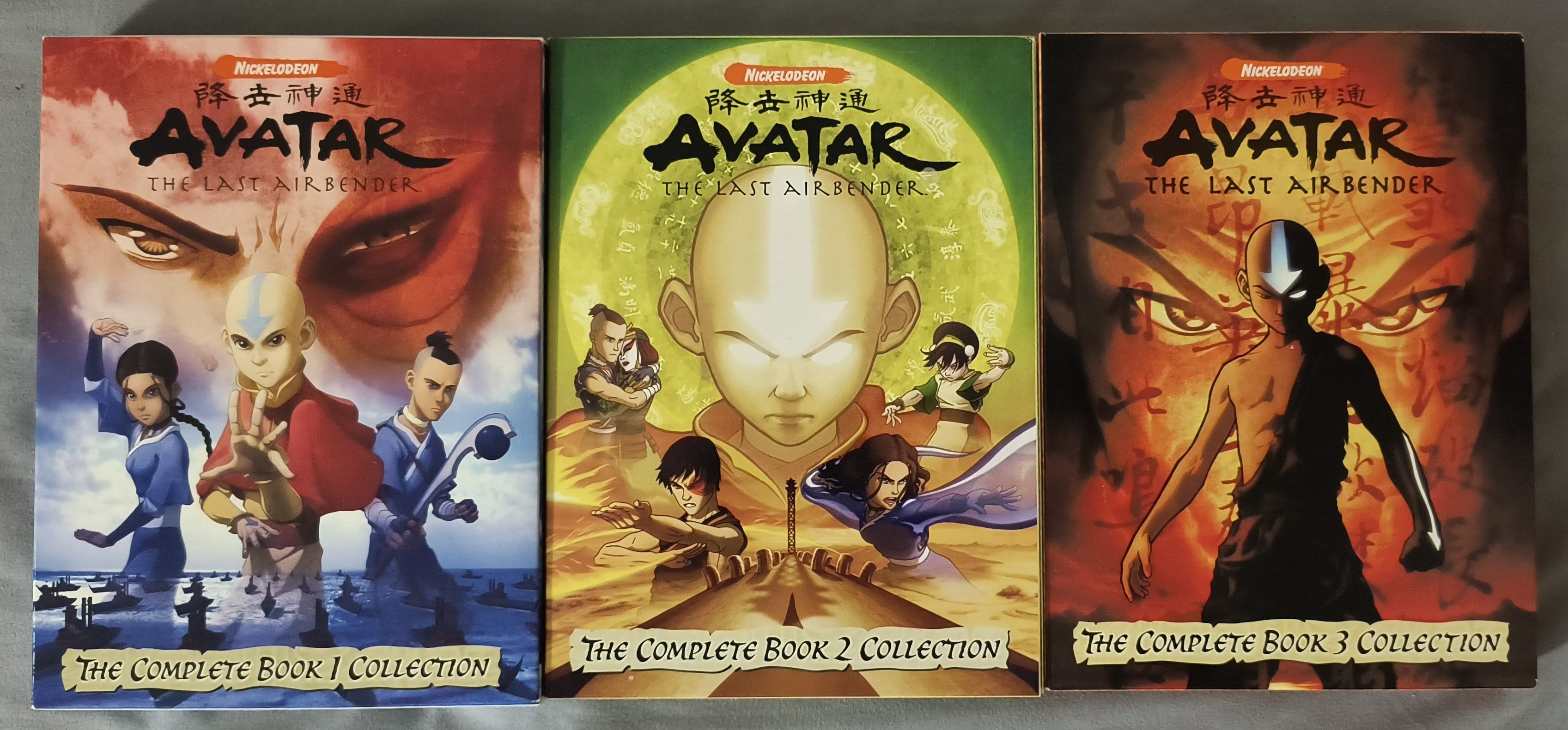
The first way is enjoying it as children’s entertainment. This means that you enjoy it solely or chiefly in the context of it being for children. The story is straightforward and simple, there are only a few major themes which do not move beyond scratching the surface, and it is there as mere entertainment for children that may also be amusing to their parents. It has no in intellectual or emotional value to you as an adult, but you may be able to enjoy it alongside the child for whom it is intended.
There is nothing inherently wrong with children’s entertainment of this sort. It merely speaks to a particular audience at a particular point in time. It is limited in its meaning and reach, but children may always find value in things that adults neglect. Such stories will not be revisited by adults apart from extreme cases of nostalgia. They will resurface in our minds only when something jogs our memory, and we will have a faint pang of longing for childhood before it dissipates and we return to the present.
The second way is to enjoy, or better, appreciate, the media in its own right. This would be a piece of children’s fiction that touches on ideas or themes deep in the human psyche. Children’s media often deals with archetypes in a more direct way than adult media which enables such stories to have universal value when done well. In my eyes, ATLA is a prime example of this sort. It is a series that was clearly directed toward an audience in the range of 8-14 years old, but it remains fully enjoyable and entertaining for an adult audience.
A few elements of this may be the quality of writing, the complexity of the characters, and the maturity of the themes and plot lines. A piece of children’s media can be as dark, complex, and emotionally impactful as many examples from adult media. Disney’s The Hunchback of Notre Dame is another example of this. These are stories that carry meaning far beyond simple entertainment for children, but remain meaningful to audiences long after childhood. These are stories that an adult might take time to watch, even without a child present, because they are stories worth revisiting and appreciating. They just happen to be directed primarily toward children.

Nostalgia certainly plays a role in revisiting these stories as well, but it is not the chief motivation. This current viewing of ATLA is probably my fifth or sixth overall. It is a series I return to every few years, and it feels special each time. I intend to watch it again in a couple years, and I certainly intend on showing it to my future children. There is a sense of nostalgia for me, remembering the first time I saw the show, or my state in life when that viewing occurred, but the series is enjoyable in this moment and not solely in light of those past moments. It is a series that has something to say to its audience, regardless of age group. As I said above, children’s media often deals directly in archetypes, allowing for a sense of purity in exploring even complex themes of good and evil.
A major virtue of ATLA is its character development. You see growth and maturity from all of the characters, even the adults. These character journeys are explored organically and never feel forced. (Spoiler alert for those who have not seen the show) Zuko’s legendary redemption arc is a long process that includes several steps backward before he finally finds his footing. His redemption arc grabs people so fiercely, I think, because he fails so much along the way and slides back to his former self.
It would be nice if we could embark on our own journeys of improvement and never fall short, just cut to a training montage and at the end we’re new and improved. But life doesn’t work that way, and it doesn’t work that way for Zuko either. Even with his metamorphosis in book 2, leading to his release of Appa from the Dai Li’s prison, he still falls back to his desire to please his father and follow the destiny that had been assigned to him.
Zuko fails and falls short many times, and it’s frustrating to watch just as it’s frustrating to experience in our own lives. His arc connects with people so effectively because of how many steps back he takes before, at last, making progress. Just when you think his arc is complete, and that he has found his footing, he slips and falls away again. The relatableness of Zuko’s flaws has enshrined his journey in the canon of all-time greatest character arcs.
Whenever I seek to change something in my life, such as correcting my sleep schedule or improving my diet or leaving behind a bad habit, I inevitably fail from time to time. These backward steps aren’t the end of the road and his arc is a visualization of that. As children, we all had images of ourselves growing up to be a certain kind of person. For many of us, we fall short of the people we thought we would become or the people we thought we were. There is hope in our failures though, and with each one we prove that we can try again. Part of the impact stories have is in their ability to grant us an outsider’s perspective of the things we struggle with in our own lives.
Iroh, one of the wisest and most balanced characters of the series, also falls short and takes backward steps. He chooses to aid Zhao in his invasion of the Northern Water Tribe, despite having retired from his time in the Fire Nation army. Even if his primary intention was to support Zuko, it shows that Iroh had not yet fully given up his willingness to support the Fire Nation’s war, even temporarily.
While he was never as aggressive or volatile as his brother, Iroh’s past is complicated and it sometimes bleeds into his present throughout the series. Iroh’s center of gravity is revealed about halfway through book 2 when he mourns the loss of his son who had died fighting for the Fire Nation under Iroh’s leadership. His grief is a driving force in his desire to seek peace and to guide his nephew, Zuko, away from a path of anger and war.
There is no point in life when our development is complete. We will never reach the point of no longer needing to learn or grow as a person simply because we’ve arrived at our twilight years. Change may become harder as we grow older, but our duty to improve and to learn never ceases. The path to human perfection is long, exhausting, and impossible to complete in this life. Our failures do not halt our development, rather, they are the means by which we develop.
We fall short, and we try again. We fail, and we strive to do better. We are defined by the steps we take forward, by the fact that we seek to move forward. Failure only defines us if we choose to remain in it. This is wisdom for all people at all stages of life. It is wisdom found in children’s fiction. It is a simple truth that can discovered in countless places, sometimes becoming most glaringly obvious and impactful when presented to us like we’re children. Truth is meaningful no matter where it is found, because all truth comes from the same source, and truth is eternal.
“Truth is meaningful no matter where it is found, because all truth comes from the same source, and truth is eternal.”
This is a lesson that is pervasive in children’s literature. And not so much in adult works. This likely explains a great deal about the present-day attack on truth. My favorite children’s author is Roald Dahl. Not exactly fantasy like your preferences, but still I would much rather read a children’s fiction book than most any adult fiction book.